Why Some Frisco Roofing Insurance Claims Become More Stressful The Longer Damage Goes Undocumented
Article
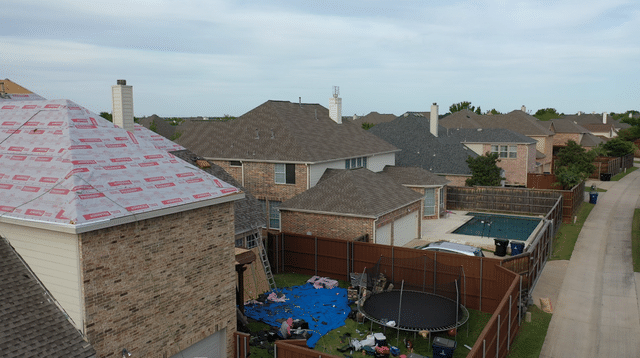
Frisco homeowners rarely decide to delay documenting roof damage because they want to ignore a problem. More often, the house appears stable enough to justify waiting. A ceiling stain stops growing, no water is actively dripping into a room, and daily life begins competing with the uncertainty of whether anything serious actually happened. Weeks pass, then a month or two passes, and the original storm becomes less important than work schedules, family obligations, and the assumption that truly severe damage would have made itself obvious by now. The challenge is that roofing insurance claims are often built on evidence, chronology, and documentation rather than on how dramatic conditions appear from inside the home. By the time a homeowner decides to investigate further, the conversation is no longer only about roof damage. It becomes a conversation about reconstructing what happened, when it happened, and how the condition evolved after the original weather event. That reconstruction process is where many claims become more stressful than homeowners expected.
In Frisco, that reconstruction can become particularly complicated because North Texas weather rarely operates as a single isolated event. A spring hailstorm may be followed by weeks of intense heat. Summer heat can be followed by strong wind events. Periods of apparent stability can be interrupted by another round of rain before anyone has inspected the original condition. The house continues responding to those environmental cycles even when the homeowner is no longer thinking about the first storm. Moisture moves. Sealants age. Ventilation conditions influence attic humidity. Small vulnerabilities that seemed insignificant during one weather cycle can behave differently during the next. The house continues keeping track of environmental history long after the homeowner has mentally moved on.
That does not mean every delayed claim becomes a problem. Many homeowners document damage later and still move through the insurance process successfully. The issue is that documentation delays often create uncertainty, and uncertainty creates additional work. Contractors spend more time reconstructing timelines. Homeowners spend more time searching photos and text messages. Insurance adjusters ask more questions about dates, symptoms, and prior repairs. Stress grows not because the damage automatically becomes worse, but because the sequence of events becomes harder to verify. The longer that sequence remains undocumented, the more effort everyone must invest in understanding what the house has been doing.
Homeowner Delay And The Slow Process Of Normalization
Many insurance-related roofing situations begin with something that feels surprisingly minor. A homeowner notices a few shingle fragments near a downspout after a storm. Someone spots a small ceiling discoloration near a hallway but cannot remember whether it appeared before or after recent rain. A section of gutter seems slightly different than it did last month. None of those observations automatically feel urgent. In fact, they often feel small enough that homeowners intentionally wait to see whether additional evidence appears. That waiting period is understandable because most people are trying to avoid overreacting to a condition they do not fully understand. The problem is that normalization often begins during that same waiting period. Small concerns start feeling familiar simply because they remain present without creating immediate disruption.
Contractors encounter this pattern regularly during inspections. Homeowners frequently describe symptoms that they noticed weeks earlier but gradually stopped paying attention to because the house continued functioning normally. The stain remained the same size. The room stayed comfortable. The roof never appeared visibly damaged from the ground. Family routines continued uninterrupted. From the homeowner's perspective, those observations feel like evidence that the situation is stable. From an inspection perspective, however, stability and documentation are not necessarily the same thing. A condition can remain visually unchanged while hidden evidence continues developing elsewhere within the roofing system.
Part of the challenge comes from how people naturally evaluate risk inside their homes. Most homeowners judge conditions based on what they can directly observe. If a bedroom ceiling looks normal, the bedroom feels normal. If the attic is never visited, attic conditions rarely influence day-to-day decision making. Insurance documentation operates differently. Documentation relies on evidence, chronology, photos, inspection findings, and observed conditions rather than on daily comfort levels. A homeowner may feel confident that everything is under control because the living space appears unchanged, while the documentation process still lacks the information needed to clearly establish a claim timeline. The house and the paperwork can be telling two very different stories at the same time.
This difference between lived experience and documented evidence becomes more significant when homeowners begin trying to remember exactly what happened. They may remember a hailstorm occurring sometime in spring but struggle to remember the exact date. They may recall seeing granules near a downspout but cannot remember whether photographs were taken. They may know a stain appeared after a storm season but feel uncertain about which specific weather event came first. None of those memory gaps are unusual. In fact, they are common. The longer documentation is delayed, the more often contractors find themselves helping homeowners reconstruct events that originally seemed too minor to record.
Visible Symptoms Versus The Original Entry Point
One reason delayed documentation creates confusion is that the symptom homeowners notice is not always the same location where damage originally began. A ceiling stain might become visible in a second-floor room even though water first entered through a roofing component several feet away. Wind-driven rain can follow framing paths before becoming visible. Moisture can move along decking surfaces before finding a location where it finally appears inside the home. The symptom receives attention because it is visible. The original entry point often remains hidden because it is not. By the time someone begins documenting the condition, the visible symptom and the source location may already seem disconnected from one another.
During inspections, contractors often slow down around these situations because the visible symptom alone rarely provides enough information. The ceiling stain matters, but it does not necessarily explain the full story. Inspectors look at roof surfaces, penetrations, flashing details, attic conditions, insulation behavior, and moisture patterns to determine how evidence connects across different parts of the home. The goal is not simply finding a stain. The goal is understanding how the stain developed, what conditions allowed it to develop, and whether those conditions align with the homeowner's recollection of events. That reconstruction becomes easier when documentation begins early and harder when months of environmental exposure separate the original event from the inspection date.
Repeated North Texas Weather Pressure Changes The Story
Many homeowners think about storm damage as a single event. A hailstorm arrives, causes damage, and leaves. In reality, roofing systems throughout North Texas often experience multiple environmental pressures before anyone evaluates the original condition. Hail may create initial damage. Wind may affect loosened components afterward. Heat cycles may accelerate deterioration around already vulnerable areas. Rain may test weaknesses that were not obvious immediately after the storm. The house experiences these events as a continuous sequence rather than as isolated incidents. Documentation delays allow more of that sequence to occur before anyone begins recording evidence.
Frisco roofs experience intense temperature fluctuations during much of the year. Roofing materials expand and contract repeatedly. Sealants respond to ultraviolet exposure. Ventilation systems influence attic temperatures. Moisture conditions change as weather patterns shift. When a roofing component has already been compromised by a storm event, these environmental factors can affect how the condition evolves. Homeowners may interpret later symptoms as entirely new problems when, in reality, they are seeing a continuation of an earlier condition that was never fully documented. That distinction becomes important during insurance discussions because chronology matters.
This is where false confidence often develops. A homeowner survives several rain events without visible interior damage and concludes that concerns were probably exaggerated. Then another storm arrives months later and new symptoms appear. The homeowner understandably assumes the latest storm created the issue because the symptoms appeared after that event. Sometimes that assumption is correct. Sometimes inspection findings reveal evidence suggesting that conditions were developing much earlier. The difficulty is that delayed documentation reduces the amount of information available for comparison. Instead of evaluating fresh evidence immediately after a weather event, everyone is trying to interpret evidence that has already experienced additional environmental exposure.
Contractors frequently hear homeowners describe situations where they initially planned to schedule an inspection but never followed through because the house seemed fine. Then another season passed. Another weather event occurred. Another small symptom appeared. Eventually the collection of observations felt significant enough to investigate. By that point, however, the inspection is no longer evaluating a single moment in time. It is evaluating a chain of weather exposure, homeowner observations, and changing house conditions. The insurance conversation becomes more complicated because the timeline itself requires interpretation.
Storm Timing And False Confidence
One of the most common reconstruction challenges involves homeowners who remember the general timing of a storm but not the details surrounding it. They know hail occurred. They know wind occurred. They know the neighborhood discussed damage afterward. What becomes less clear is exactly when they first observed symptoms, whether photographs were taken, whether repairs were attempted, and whether conditions changed between storms. These missing pieces do not mean anyone acted incorrectly. They simply reflect how people naturally remember events that did not initially appear critical.
Insurance documentation often benefits from clear chronology. Contractors may review weather history, inspection findings, attic evidence, and homeowner observations to better understand how conditions developed. Sometimes the reconstruction process reveals that homeowners were monitoring the situation more closely than they realized. A photo taken during a family gathering accidentally captures a section of roof. A text message mentions a leak concern. A maintenance receipt establishes a useful date. These small pieces of information become valuable because they help rebuild a timeline that otherwise feels fragmented. The earlier documentation begins, the less reconstruction is required later.
The stress many homeowners experience is not necessarily caused by the roof itself. Often the stress comes from uncertainty. They begin asking themselves whether they waited too long, whether they missed important signs, or whether conditions changed without their knowledge. Most of the time, those questions cannot be answered through assumptions alone. They require inspection evidence, documentation, and a careful review of how the house responded to repeated environmental pressure over time. That process is exactly where experienced inspection work becomes important, because understanding the sequence matters almost as much as understanding the damage itself.
Contractor Inspection Interpretation Often Changes The Insurance Conversation
By the time many Frisco homeowners schedule an inspection, they have already formed a working theory about what happened. They may believe the issue is limited to a small leak near a vent. They may assume a ceiling stain resulted from a one-time weather event. They may think a previous repair solved the original problem and that current symptoms are unrelated. Those assumptions are reasonable because homeowners are working from the information available to them. The inspection process exists because visible observations rarely provide the complete picture. A contractor is not simply looking for damage. The contractor is evaluating whether the evidence supports the homeowner's interpretation of events or points toward a different sequence entirely. That distinction becomes important when insurance documentation depends on evidence rather than assumptions.
Experienced inspectors typically move through a sequence rather than jumping directly to recommendations. Roof surfaces are evaluated. Flashing areas are reviewed. Penetrations, valleys, transitions, gutters, and drainage patterns are examined. Attic conditions are compared against room-visible symptoms. Moisture indicators, insulation behavior, ventilation patterns, and decking conditions are documented. Notes and photographs are collected before conclusions are discussed. This sequence matters because insurance claims often become stronger when observations are supported by documented findings rather than by generalized descriptions of roof damage. Homeowners may arrive expecting a simple yes-or-no answer and instead discover that the inspection is building a chronology of how the house has behaved over time.
A common inspection outcome involves discovering evidence that predates the symptom that originally motivated the call. A homeowner may schedule an inspection because a ceiling stain appeared after recent rain, only for attic findings to suggest moisture activity has been occurring much longer. Fastener oxidation, insulation compression, decking discoloration, and ventilation-related humidity patterns can sometimes reveal environmental history that is not visible from inside the living space. The room tells one story. The attic tells another. Neither story is necessarily wrong, but they often describe different stages of the same condition. This is why contractors frequently spend time comparing visible symptoms against hidden evidence before discussing claim implications.
That comparison process can also reduce unnecessary claim stress. Homeowners occasionally assume the worst when they discover evidence that was previously hidden. In reality, inspection findings often provide clarity rather than escalation. The goal is not to prove that a problem is catastrophic. The goal is to understand what happened, what is still active, and what documentation exists to support future decisions. Insurance conversations become more manageable when evidence replaces uncertainty. A contractor who can explain what was observed, where it was observed, and how it connects to the home's timeline gives homeowners something concrete to work from instead of forcing them to rely on memory alone.
Photo Documentation And Homeowner Walkthrough Logic
One reason documentation plays such an important role in insurance-related roofing situations is that photographs preserve information that memory often loses. Homeowners frequently remember that damage existed but struggle to recall exactly how conditions looked several months earlier. A photograph captures details without requiring recollection. Granule loss patterns, lifted shingles, soft-metal impacts, flashing conditions, attic staining, insulation compression, and moisture pathways become reference points rather than memories. As documentation accumulates, the timeline becomes easier to understand because evidence no longer depends entirely on what someone remembers weeks or months later.
Contractors often walk homeowners through documentation because visual evidence helps bridge the gap between field findings and homeowner understanding. A photograph of attic staining above a room that appears perfectly normal creates an immediate connection between visible and hidden conditions. Images showing the progression of moisture paths can explain why symptoms appeared where they did. Comparison photographs taken from different inspection dates can demonstrate whether conditions remained stable or continued evolving. These walkthroughs are valuable because they transform inspection findings into something homeowners can evaluate for themselves rather than simply accept as technical conclusions.
Insurance discussions benefit from this same documentation discipline. Clear photographs, organized notes, and documented observations provide a stronger foundation than verbal descriptions alone. When claim-related questions arise, homeowners are no longer relying exclusively on fragmented recollections of storm seasons or repair histories. Instead, they have a record of observed conditions and documented findings. The stress associated with uncertainty begins decreasing because the conversation becomes evidence-centered rather than memory-centered. Even when conditions are complex, documentation creates structure.
Many review experiences in roofing and restoration industries share a similar theme. Homeowners often describe relief after receiving clear explanations supported by photographs and documentation. The relief does not necessarily come from learning that conditions are minor. It comes from finally understanding what the house is doing. Confusion is replaced with sequence. Uncertainty is replaced with evidence. Whether a claim ultimately proceeds or not, homeowners generally feel more confident when observations are documented and explained in a way that aligns with what they can physically see.
Hidden Moisture, Attic Conditions, And HVAC Interaction
Insurance claims become more difficult when visible evidence represents only a small portion of the actual condition. This situation occurs frequently with moisture-related roofing issues because water rarely follows a simple path from roof surface to living room ceiling. Instead, moisture can move through decking assemblies, framing members, insulation layers, ventilation channels, and attic spaces before creating an interior symptom. By the time a homeowner notices visible staining, the condition may have already interacted with multiple parts of the home. Understanding that interaction often requires more investigation than homeowners initially expect.
The attic becomes particularly important because it often preserves evidence that living spaces do not. A bedroom ceiling may appear unchanged while insulation above it shows signs of compression. A hallway may seem completely unaffected while nearby decking contains discoloration patterns associated with prior moisture exposure. Fasteners may display oxidation. Ventilation behavior may indicate elevated humidity conditions. None of these observations automatically prove active leakage, but they contribute to understanding how the house has been responding to environmental pressure. Contractors frequently spend significant time in attics because hidden evidence often helps explain conditions that seem inconsistent from inside the home.
HVAC systems can add another layer of complexity. Homeowners sometimes assume temperature differences, humidity concerns, or room comfort issues are unrelated to roofing conditions. In some cases they are unrelated. In other cases, attic moisture, ventilation performance, and environmental exposure influence how HVAC systems behave. Duct sweating, elevated attic temperatures, moisture accumulation, and ventilation imbalances can interact with roofing conditions in ways that are not immediately obvious. These interactions rarely reveal themselves through a single symptom. Instead, they appear as a collection of small observations that only begin making sense when evaluated together.
This is one reason contractors often slow down around attic evidence rather than rushing toward conclusions. The objective is not simply finding damage. The objective is understanding relationships. How does attic humidity relate to visible staining? How does ventilation performance influence moisture retention? How does repeated weather exposure affect the condition over time? How does the roofing system interact with other building components? Insurance documentation becomes stronger when those relationships are documented because they help explain why conditions developed the way they did.
Attic Evidence Contractors Tend To Slow Down Around
Certain attic observations naturally cause inspectors to spend more time documenting conditions because they often contribute valuable timeline information. Decking discoloration patterns can suggest moisture exposure history. Insulation texture changes can indicate repeated environmental influence rather than a single isolated event. Fastener oxidation can provide clues regarding humidity conditions. Ventilation behavior may reveal whether moisture is dissipating efficiently or remaining trapped within the attic environment. Each observation contributes another piece of the chronology. None should be evaluated in isolation.
Homeowners are sometimes surprised when attic findings receive as much attention as exterior roofing conditions. From their perspective, the roof is the obvious concern. From an inspection perspective, the attic frequently functions as a historical record of how the roofing system has been behaving. Exterior evidence identifies exposure. Interior evidence identifies consequences. Attic evidence often connects the two. When claim documentation is delayed, those connections become especially valuable because they help reconstruct environmental history that might otherwise be difficult to verify.
The room-and-attic comparison also prevents oversimplified conclusions. A room that looks unaffected may still sit beneath meaningful attic evidence. Conversely, a visible stain may appear dramatic while surrounding attic conditions suggest a more limited event. Insurance-related decisions benefit from understanding both sides of that comparison. The objective is not to make conditions appear larger or smaller than they are. The objective is to understand them accurately. Accurate understanding reduces friction later because decisions are built on evidence rather than assumptions.
As inspections move from observation to documentation, the insurance conversation begins changing. Instead of focusing only on whether damage exists, attention shifts toward chronology, environmental history, and evidence quality. Homeowners start seeing how roof conditions, attic conditions, moisture behavior, ventilation patterns, and documentation all contribute to the same story. That story becomes the foundation for the next stage of the process: understanding how insurance documentation friction develops and why claims often become more stressful when important evidence is collected too late.
Insurance Documentation Friction Usually Begins With Missing Sequence Information
Many homeowners assume insurance friction starts when a claim is denied, questioned, or delayed. In reality, friction often begins much earlier. It starts when important pieces of the timeline are missing. The roof may contain legitimate storm-related evidence. The attic may contain observable moisture indicators. Interior symptoms may exist. Yet everyone involved is still trying to determine how those observations fit together. Insurance carriers, contractors, and homeowners all rely on chronology because chronology helps explain whether current conditions align with documented events. The longer damage remains undocumented, the more often that chronology requires reconstruction instead of simple verification.
This does not mean homeowners are expected to become roofing experts immediately after every storm. Most people are managing careers, families, travel schedules, and dozens of other responsibilities. A hailstorm occurs. Life continues. A few weeks later, another weather event arrives. Months later, someone notices a symptom that suddenly makes the original storm feel relevant again. The challenge is that the insurance process tends to work best when observations, documentation, and chronology develop together. When those pieces become separated by time, additional effort is usually required to reconnect them.
Contractors frequently encounter situations where the roof condition itself is easier to evaluate than the sequence surrounding it. Physical evidence may be present, but the homeowner is uncertain when symptoms first appeared. Previous repairs may have occurred, but records are incomplete. Storm events may be remembered generally but not specifically. Photographs may exist but lack clear dates. None of these issues automatically prevent a claim from moving forward. They simply increase the amount of investigative work required to establish context. The insurance conversation shifts from reviewing evidence to reconstructing how evidence accumulated over time.
Homeowners often feel frustration at this stage because they believe they are being asked questions they should have anticipated months earlier. In reality, these situations are common. Most people do not photograph every section of their roof after every weather event. Most people do not maintain detailed logs of attic observations. Most people are not thinking about insurance documentation until a condition becomes important enough to justify action. The stress comes from discovering that the house has been collecting evidence for months while documentation has not been doing the same.
Fragmented Recollection Creates Additional Work For Everyone
One of the most consistent patterns in delayed insurance situations involves fragmented recollection. Homeowners usually remember important events, but the order becomes less clear over time. They remember a hailstorm. They remember seeing granules near a downspout. They remember discussing concerns with family members. They remember noticing a stain. What becomes difficult is determining which event happened first and how much time separated one observation from another. Those gaps are not failures of memory. They are a normal consequence of living through events that initially appeared manageable.
Contractors often help rebuild these timelines through documentation rather than speculation. Inspection notes, photographs, weather records, maintenance receipts, and homeowner observations are compared against one another. The objective is not to force a specific conclusion. The objective is to understand the most accurate sequence possible. A homeowner might remember a ceiling stain appearing after a major storm, only to discover through photographs that the stain existed earlier than expected. Another homeowner may believe damage appeared suddenly when documentation suggests conditions were progressing gradually over multiple weather cycles. Reconstruction creates clarity because it reduces dependence on memory alone.
The reconstruction process also helps explain why delayed documentation sometimes feels emotionally exhausting. Homeowners are not only dealing with roof concerns. They are reviewing months of decisions, assumptions, and observations. They wonder whether they should have called sooner. They wonder whether they missed important evidence. They wonder whether a previous repair influenced current conditions. These questions create stress because they involve uncertainty, and uncertainty tends to grow when documentation is limited. Evidence often provides relief because it shifts the conversation away from self-doubt and back toward observable facts.
Review-memory patterns across roofing and restoration projects frequently reveal the same emotional theme. Homeowners describe feeling significantly better once they understand the sequence of events, even before final claim outcomes are known. Clarity reduces anxiety. Documentation reduces speculation. When the chronology begins making sense, the process feels more manageable because the homeowner no longer needs to carry the entire reconstruction effort alone. Contractors, photographs, inspection notes, and documented observations begin sharing that responsibility.
Previous Repairs And Repair Fatigue Can Complicate Claim Discussions
Another source of insurance documentation friction appears when homeowners have attempted to address symptoms before fully understanding the underlying condition. A small leak may have been repaired several years earlier. Sealant may have been applied around a penetration. A section of flashing may have received maintenance. These actions are often reasonable because homeowners are trying to protect the house. The difficulty arises when later symptoms appear and everyone must determine whether current conditions relate to new damage, prior repairs, ongoing environmental exposure, or a combination of all three.
Contractors regularly encounter homes where previous repair efforts created temporary stability. The repair may have successfully addressed the symptom that existed at the time. Months later, a new weather cycle reveals a different vulnerability. From the homeowner's perspective, the problem feels like a completely new issue. From an inspection perspective, the relationship between past repairs and current conditions deserves careful evaluation. The objective is not to criticize earlier decisions. The objective is to understand how the house responded after those decisions were made. Insurance documentation becomes stronger when repair history is understood rather than ignored.
Repair fatigue can also influence homeowner behavior. After dealing with multiple roofing concerns over several years, some homeowners become hesitant to react quickly to new symptoms. They have already invested time, money, and attention into previous issues. A small stain or minor concern may feel less urgent because similar situations appeared manageable in the past. This adaptation behavior is understandable. People naturally adjust to recurring conditions. The challenge is that adaptation sometimes creates false confidence. A familiar symptom can seem less important simply because it has become familiar, not because the underlying condition has improved.
Environmental exposure contributes to this complexity. North Texas heat, wind, humidity, and storm cycles continue influencing repaired areas long after work is completed. A condition that appears stable through one season may respond differently during another. A repaired component may perform well until new weather pressures reveal previously hidden vulnerabilities. The house does not separate old events from new events as neatly as people often do. Roofing systems respond to accumulated environmental history, which is why contractors frequently review repair chronology alongside current observations.
Temporary Stability Does Not Automatically Mean Resolution
One of the most important concepts in insurance-related roof evaluations is the difference between stabilization and resolution. Stabilization means conditions appear calm. Resolution means evidence supports the conclusion that the underlying concern has been addressed. Those two ideas often overlap, but they are not identical. A ceiling can remain dry for months. A repaired area can perform well during several weather cycles. A homeowner can reasonably believe the issue has been resolved. Then another environmental trigger appears and the condition reactivates.
Contractors frequently see this pattern after periods of apparent calm. A homeowner describes a stain that stopped changing. Rain events occurred without visible symptoms. Life returned to normal. Then a stronger storm arrives, temperatures shift, humidity levels change, or wind exposure increases. Suddenly the concern returns. The homeowner feels blindsided because the house appeared stable. Inspection findings sometimes reveal that stability existed at the symptom level while underlying conditions remained unresolved. The visible symptom calmed down. The environmental story never fully ended.
This stabilization-reactivation cycle explains why delayed documentation can create additional stress. Homeowners often begin documenting conditions only after reactivation occurs. By then, the process must account for both the current symptom and the earlier period of apparent stability. Questions naturally emerge. What stabilized? What remained active? When did conditions begin changing again? These are evidence questions rather than emotional questions, which is why inspection documentation becomes so important. Documentation helps distinguish between a condition that genuinely resolved and a condition that temporarily stopped attracting attention.
The insurance process generally benefits from understanding this distinction because claim discussions often involve environmental history rather than single isolated moments. A roof condition may have experienced exposure, stabilization, and reactivation before anyone initiated formal documentation. Recognizing that possibility does not create urgency for urgency's sake. It simply acknowledges how roofing systems often behave over time. Houses remember environmental events differently than people do. Roofing materials, attic environments, and moisture pathways continue responding to conditions even when daily life encourages homeowners to focus elsewhere.
Support-Cluster Branching Without Losing Focus
At this stage, many roofing insurance claim situations naturally intersect with related concerns. Hidden moisture tracing becomes relevant when attic evidence and interior symptoms diverge. Ventilation interaction becomes relevant when humidity, attic conditions, and HVAC performance influence observations. Storm sequencing becomes relevant when multiple weather events complicate chronology. Temporary stabilization becomes relevant when homeowners experience long periods of apparent calm before reactivation occurs. These branches are important because they influence documentation quality, but they should support the insurance discussion rather than distract from it.
The most effective inspections usually maintain that balance. Contractors acknowledge connected systems without allowing the conversation to become scattered. Documentation remains focused on evidence. Chronology remains focused on sequence. Environmental history remains focused on how the house responded over time. Every branch eventually reconnects to the same objective: understanding what happened, what evidence exists, and what information supports future decisions. When documentation remains organized around those goals, homeowners often feel less overwhelmed because the process becomes easier to follow.
By the time reconstruction, repair history, stabilization patterns, and environmental exposure have been evaluated, the insurance discussion begins looking very different from where it started. What originally seemed like a simple roofing concern becomes a broader investigation into house behavior, evidence quality, and chronology. That investigation is not about making a claim appear larger than it is. It is about making the story accurate. Accuracy matters because it provides the foundation for the final stage of the process: stabilizing uncertainty, establishing trust through documentation, and helping homeowners make informed decisions based on evidence rather than assumptions.