Why Little Elm Homeowners Often Misread Hidden Moisture & Water Intrusion Problems After Hail, Wind, and Heat Cycles Overlap
Articles
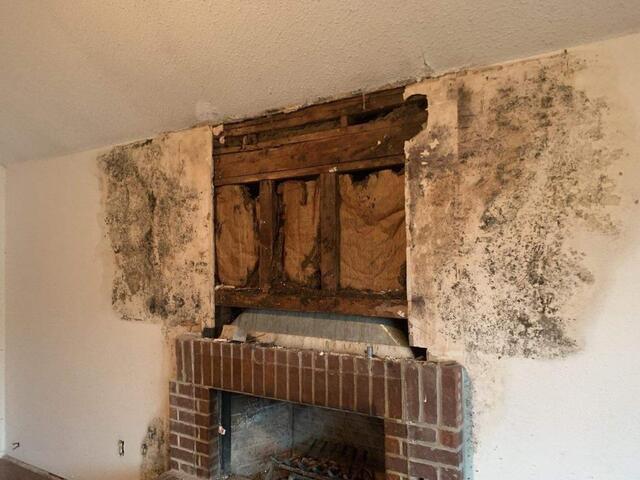
Many hidden moisture problems in Little Elm do not begin with a dramatic ceiling collapse, a major leak, or a sudden emergency call. The first signs are often small enough that homeowners explain them away. A faint stain appears near a bedroom vent after a storm. A section of drywall seems slightly darker than it was a few weeks ago. An upstairs room feels more humid than the rest of the house during the afternoon, but the air conditioner is still running and the home otherwise feels normal. Because the house continues functioning, many families assume whatever changed is temporary. That assumption is often reinforced when days or weeks pass without obvious worsening.
The challenge is that hidden moisture rarely follows the same timeline homeowners use to judge whether something is serious. Water intrusion frequently begins in one location and becomes visible somewhere else entirely. A roof component may experience storm-related damage during a hail event, but the first visible symptom can emerge inside the house long after the weather has cleared. By that point, heat cycles, humidity shifts, and repeated weather exposure may already be influencing how moisture moves through the structure. The visible symptom becomes disconnected from the original cause. Homeowners end up evaluating the wrong part of the problem because the house is revealing only a small portion of what is actually occurring.
This pattern appears frequently throughout North Texas because weather events rarely operate independently. Little Elm homes experience hail, strong wind, heavy rain, extended heat exposure, and humidity fluctuations throughout the year. A roof system may survive one event with only minor disruption, but repeated environmental pressure can slowly alter how moisture behaves within the structure. Areas that initially appear stable may become vulnerable after months of expansion, contraction, drying, and rewetting. Homeowners often remember the major storm that seemed significant while forgetting several smaller events that occurred afterward. The house, however, retains the entire environmental history whether anyone notices it or not.
Contractors investigating hidden moisture concerns often spend significant time reconstructing events that homeowners no longer think are relevant. A family may remember a hailstorm from spring but overlook a wind event during summer. They may remember a ceiling stain that appeared recently but forget that a minor repair was completed several years earlier in the same section of roof. They may focus on the room where a symptom appears while the actual moisture pathway begins somewhere completely different. Hidden moisture investigations become less about finding a single leak and more about rebuilding the sequence of environmental conditions that influenced the house over time. That reconstruction process is often where the real story begins.
The difficulty becomes even greater when homeowners have adapted around the symptoms. Many families develop routines that unintentionally normalize instability. They place a bucket in a certain location during heavy rain. They periodically repaint a discolored area. They keep an eye on a section of ceiling after storms. They monitor an upstairs room that feels warmer than expected. None of those actions necessarily solve the underlying issue, but they create a sense of control that can make conditions appear less urgent. The house continues operating, daily life continues, and the visible symptom becomes part of the background.
That homeowner adaptation is one reason hidden moisture and water intrusion problems are often misunderstood. The concern is not that homeowners ignore their homes. Most are paying close attention. The concern is that the house frequently provides incomplete information. What seems like a minor cosmetic issue may actually be connected to attic conditions, roof-system behavior, ventilation performance, insulation changes, or moisture migration occurring beyond visible surfaces. The room is telling one story while the structure is telling another. Until those stories are compared through inspection, the true condition often remains hidden.
Homeowner Delay And Partial Normalization Often Begin Long Before The First Inspection
One of the most common patterns contractors encounter is partial normalization after an initial symptom appears. A homeowner notices something unusual but not severe enough to justify immediate action. The symptom may be small, inconsistent, or difficult to interpret. Perhaps a ceiling stain appears after a storm and then seems unchanged for several weeks. Maybe an upstairs hallway develops a slight odor during humid weather but smells normal most of the time. Because the symptom does not create an immediate emergency, homeowners often move into an observation phase. They watch the area and wait for additional evidence before calling someone.
That decision is understandable because many houses produce occasional irregularities that never become major problems. Homeowners learn through experience that not every stain means roof failure and not every temperature difference signals structural damage. The difficulty arises when hidden moisture conditions create periods of apparent stability. Moisture movement inside a structure is rarely constant. Environmental conditions change daily. Dry periods may temporarily reduce visible symptoms. Cooler temperatures may slow moisture activity. Ventilation changes may alter how conditions present themselves inside the home. The symptom seems improved even though the underlying pathway remains active.
A common example involves a stain that appears after heavy rain and then remains unchanged throughout a dry stretch. Homeowners naturally assume the issue has stopped progressing. From their perspective, the evidence supports that conclusion. The stain is not growing, the ceiling is intact, and the room appears normal. During inspection, however, contractors sometimes discover attic moisture patterns indicating that water intrusion occurred repeatedly but dried between events. The visible stain remained stable while the attic continued experiencing cycles of moisture exposure. What appeared resolved was actually fluctuating with environmental conditions.
This disconnect often creates false confidence around timing. Families begin believing that if a problem has not worsened significantly within a certain period, it is probably minor. Unfortunately, hidden moisture does not always respect those expectations. Water can travel along framing members, decking surfaces, insulation pathways, and penetrations before becoming visible. Some conditions develop slowly enough that homeowners never witness dramatic change. Instead, the house experiences gradual deterioration that becomes apparent only when inspection evidence is assembled into a larger timeline. The absence of dramatic symptoms becomes interpreted as proof of stability even when stability does not exist.
Another factor involves memory. By the time a contractor arrives, the original sequence of events may already be fragmented. Homeowners remember noticing a symptom but cannot recall exactly when it first appeared. They remember one storm clearly but forget others. They remember repainting a ceiling section but not the environmental conditions that led to that decision. None of this reflects negligence. It reflects normal human behavior. Most people are not maintaining detailed environmental logs for every part of their home. As a result, contractors often spend time reconstructing timelines that have become compressed or partially forgotten.
The reconstruction process frequently reveals longer histories than expected. A homeowner may describe a moisture issue as relatively recent only to realize during conversation that similar symptoms existed months earlier. A minor discoloration observed last year may suddenly become relevant after current conditions are compared with older photographs. A repair completed several years ago may reconnect with a moisture pattern now appearing elsewhere in the structure. The house preserves these relationships even when homeowners do not consciously connect them. Inspection becomes an exercise in rebuilding continuity between isolated observations.
Little Elm homes present additional challenges because environmental exposure rarely occurs in a straight line. Conditions change quickly across seasons. Heat, humidity, rainfall, and storm activity create overlapping influences that affect roofing materials, attic performance, ventilation systems, and moisture behavior simultaneously. Homeowners evaluating a symptom based on a single event may unknowingly overlook months of accumulated environmental pressure. The symptom they notice today may represent the combined effect of numerous conditions acting together over time. By the time visible evidence appears, the actual timeline may be far older than expected.
Repeated North Texas Weather Pressure Changes How Moisture Behaves Inside A Home
Many homeowners think of storms as isolated events. A hailstorm occurs, damage either exists or does not exist, and the house moves forward from that point. In reality, moisture-related conditions often develop through repeated environmental exposure rather than a single dramatic incident. The interaction between hail, wind, rain, heat, and humidity can gradually alter how water enters, moves through, and exits a structure. Each event contributes information to the condition of the house. The cumulative effect often matters more than any individual weather event.
Hail is one piece of that equation, but not the only one. A roof may experience hail impacts that create vulnerabilities too subtle to generate immediate interior symptoms. Wind events occurring afterward can affect roofing components that were already weakened. Heavy rainfall can test those vulnerable areas. Subsequent heat exposure may accelerate aging processes within roofing materials. Moisture pathways that initially seemed insignificant can become more active as environmental pressure continues. The progression rarely follows a predictable schedule, which makes homeowner interpretation difficult.
Heat plays a larger role in hidden moisture conditions than many people realize. During North Texas summers, attic temperatures can become extreme. Materials expand, contract, and age under repeated thermal stress. Sealants experience ongoing exposure. Ventilation performance becomes increasingly important. Minor vulnerabilities that seem manageable during cooler months may behave differently after prolonged heat cycles. Homeowners often focus on rainfall because water is the visible concern, but contractors frequently evaluate how temperature exposure influences the movement and persistence of moisture within the structure.
Humidity creates another layer of complexity. Moisture problems are not always the result of direct water entry alone. Attic environments can retain moisture differently depending on ventilation conditions, insulation performance, seasonal weather patterns, and air movement throughout the structure. A room may appear dry while attic humidity remains elevated. Insulation may begin responding to moisture long before interior drywall reveals visible evidence. By the time homeowners notice a symptom, environmental conditions may have been influencing the structure for months.
These overlapping environmental forces help explain why visible symptoms and actual conditions often fail to align. A homeowner notices a stain after a storm and assumes the storm created the problem. The inspection may reveal that the storm simply exposed a condition that had been developing over a much longer period. The stain becomes the first visible chapter of a story already well underway. Understanding that distinction is critical because it changes how decisions are made. The goal shifts from reacting to a single symptom toward understanding the broader environmental history affecting the house.
Repeated weather pressure also contributes to homeowner adaptation. When symptoms appear intermittently, families become accustomed to monitoring rather than investigating. If a stain becomes darker only during specific weather conditions, it may feel reasonable to wait. If an odor appears only during humid periods, homeowners may assume it is temporary. If an upstairs room feels different only during summer, attention often shifts elsewhere once temperatures moderate. The symptom becomes seasonal rather than structural in the homeowner's mind. Meanwhile, environmental conditions continue influencing the house regardless of how visible the effects become.
For contractors, this is why inspection conversations often begin with weather history rather than visible damage alone. Understanding when symptoms appeared, how they changed, what environmental conditions were present, and whether previous repairs occurred helps establish context. The roof, attic, ventilation system, and interior spaces are rarely acting independently. They are interacting with years of environmental exposure. Identifying hidden moisture frequently requires understanding those interactions before any meaningful conclusions can be reached.
Contractor Inspection Interpretation Often Reveals A Different Story Than The One Visible Inside The Home
When homeowners finally schedule an inspection for hidden moisture concerns, they often expect contractors to confirm what they already suspect. If a stain appears above a bedroom ceiling, they assume the investigation will focus primarily on that room. If discoloration develops around a vent, they expect the source to be directly above the visible symptom. In practice, professional inspections frequently move in the opposite direction. Contractors begin by examining how the house behaves as a system rather than treating the visible symptom as the entire problem. That difference in approach is often what uncovers conditions homeowners could not reasonably see on their own.
A hidden moisture inspection usually starts with sequence reconstruction. Contractors want to understand when symptoms appeared, what weather events occurred beforehand, whether previous repairs were completed, and how conditions changed over time. Those questions are not administrative formalities. They help establish a timeline that can reveal patterns invisible to someone looking only at current conditions. A stain that appears new may connect to a weather event from months earlier. A ceiling discoloration that seems isolated may relate to a roof component that has been gradually deteriorating through multiple seasonal cycles. The inspection process is designed to reconnect those pieces.
Exterior evaluation frequently becomes the first major reality check. Homeowners often focus on the room where symptoms appear because that is the evidence they can see. Contractors begin at the roof because that is where many moisture pathways originate. Roofing materials, flashing systems, penetrations, transitions, valleys, vents, pipe boots, gutters, and drainage behavior are all evaluated before conclusions are made. This sequence matters because water rarely travels in a straight vertical line. Moisture can enter at one location and appear somewhere entirely different after moving through the structure. The visible symptom may be several feet away from the original entry point.
That distinction becomes particularly important after hail and wind events. Homeowners sometimes assume that if shingles appear mostly intact from the ground, significant moisture-related concerns are unlikely. Contractors know that roof performance depends on far more than what can be observed from a driveway. Flashing movement, sealant deterioration, exposed fasteners, ventilation components, drainage transitions, and aging penetrations may all influence how moisture behaves. Some conditions are subtle enough that homeowners would never be expected to identify them. The purpose of the inspection is not to validate assumptions. The purpose is to gather evidence.
Evidence collection is where many hidden moisture investigations slow down. Homeowners occasionally interpret a detailed inspection as uncertainty. In reality, careful inspections often require additional time because rushing increases the likelihood of missing important information. Contractors may photograph multiple roof elevations, compare exposure patterns, evaluate drainage paths, inspect attic conditions, document material behavior, and compare visible symptoms against structural evidence. The goal is to understand the relationship between all observations rather than making a recommendation based on a single indicator. Hidden moisture problems are often misunderstood precisely because one symptom is viewed in isolation.
Attic inspections frequently become the turning point in that process. The attic contains information the living space cannot provide. Roof decking may reveal staining patterns. Fasteners may show oxidation differences. Insulation may display compression or discoloration. Ventilation pathways may demonstrate whether moisture is being adequately managed or trapped inside the structure. These observations help contractors determine whether a visible symptom represents a recent event, a recurring condition, or an environmental issue that has been developing over a longer period. The attic often explains behavior that rooms below cannot.
Homeowners are sometimes surprised when attic findings appear more significant than room-level symptoms. A ceiling may show only minor discoloration while the attic reveals repeated evidence of moisture activity. The reverse can also occur. A visible stain may appear dramatic while structural evidence indicates the issue is relatively localized. This is why experienced contractors avoid making immediate conclusions from photographs alone. Moisture investigations require context. The visible symptom is part of the story, but it is rarely the entire story.
Inspection interpretation also involves comparing environmental history against current conditions. Contractors evaluate whether weather patterns, heat exposure, ventilation behavior, previous repairs, and structural observations support the same conclusion. When multiple evidence sources point toward the same explanation, confidence increases. When observations conflict, additional investigation may be necessary. Hidden moisture problems often become expensive when assumptions replace verification. Thorough inspection helps prevent that mistake by allowing evidence rather than appearance to drive the decision-making process.
Visible Symptoms And Original Entry Points Rarely Occupy The Same Location
One of the most frustrating aspects of water intrusion for homeowners is that the symptom they notice is frequently disconnected from the location where moisture actually entered the structure. This creates understandable confusion because people naturally assume cause and effect should appear close together. If a stain develops above a living room ceiling, it seems logical to assume the roof issue exists directly above that area. Sometimes that is true. Many times it is not.
Water follows opportunity rather than convenience. Once moisture enters a structure, it interacts with framing members, decking surfaces, insulation layers, mechanical systems, gravity, airflow, and environmental conditions. As a result, the eventual symptom may emerge far from the original source. Contractors investigating moisture concerns regularly encounter situations where visible evidence appears several rooms away from the point of entry. Without inspection, homeowners have little reason to suspect that relationship exists.
This is one reason do-it-yourself diagnosis frequently becomes misleading. A homeowner identifies the symptom location and begins searching for a corresponding roof issue directly above it. If no obvious problem is found, confidence increases that the concern is minor or unrelated to the roof. Meanwhile, moisture may be entering through a transition, penetration, or flashing detail located elsewhere on the structure. The investigation becomes trapped by assumptions about location rather than guided by evidence.
The problem becomes even more complicated after repeated weather cycles. Moisture pathways often evolve. Water may follow one route during a wind-driven rain event and a different route during prolonged rainfall. Heat exposure may alter material behavior. Previous repairs may redirect water movement rather than eliminate it entirely. By the time contractors arrive, the visible symptom may represent the latest version of a pathway that has already changed multiple times. What homeowners see today may not perfectly reflect how the issue originally began.
Attic evidence is often essential for identifying these relationships. Staining patterns on decking can reveal directional movement. Insulation conditions can suggest where moisture has been traveling. Ventilation observations may explain why certain areas dry differently than others. Contractors use these clues to reconstruct pathways that are no longer obvious from room-level observations. The process resembles assembling a timeline rather than locating a single defect. Every observation contributes information about how moisture interacted with the structure.
Homeowners often find this explanation reassuring because it resolves inconsistencies they have been struggling to understand. Perhaps a stain appeared in a room that never seemed vulnerable. Perhaps symptoms changed locations over time. Perhaps visible evidence failed to match expectations based on previous experiences. Inspection findings frequently demonstrate that the house was behaving consistently even when the symptoms seemed unpredictable. The confusion resulted from incomplete visibility rather than random behavior.
Understanding the separation between entry points and symptoms also influences repair decisions. Effective solutions address the source of moisture rather than only the location where evidence appears. Cosmetic repairs may temporarily improve appearance, but they cannot correct an active pathway. Contractors therefore focus heavily on identifying origins before discussing scope. Determining where moisture enters is often more important than evaluating where it eventually becomes visible.
This evidence-based approach protects homeowners from making decisions based solely on appearances. Hidden moisture is rarely a cosmetic problem first. It is a building-behavior problem. Until the actual pathway is understood, recommendations remain incomplete. That is why inspection interpretation emphasizes reconstruction, verification, and documentation rather than assumptions. The objective is clarity, not speed.
Hidden Moisture, Attic Conditions, And HVAC Performance Frequently Influence Each Other
Many homeowners separate roofing concerns from HVAC concerns because the systems appear unrelated during daily life. The roof keeps weather out. The HVAC system controls indoor comfort. In reality, hidden moisture investigations often reveal meaningful interaction between attic conditions and mechanical performance. The relationship is not always obvious, but it becomes increasingly important when moisture intrusion, ventilation behavior, and environmental exposure overlap.
Attics serve as transitional spaces between exterior conditions and the living environment below. Heat accumulates there. Moisture moves through it. Ventilation systems influence how air behaves within it. Roofing materials protect it. When hidden moisture enters this environment, multiple systems can be affected simultaneously. A homeowner may notice comfort issues, humidity concerns, or energy-performance changes without realizing those symptoms share a connection with attic conditions.
One common pattern involves elevated humidity perceptions inside specific rooms. Homeowners describe certain areas as feeling different even when temperatures appear relatively normal. The room may seem heavier, less comfortable, or slower to recover after humid weather. Because the HVAC system is operating, attention often shifts away from roofing concerns. During inspection, contractors sometimes discover attic moisture conditions influencing the environment above those rooms. The visible symptom is comfort-related, but the contributing factors extend beyond HVAC equipment alone.
Insulation behavior also plays a significant role. Moisture can affect how insulation performs over time. Compression, displacement, and localized saturation may influence thermal efficiency. Homeowners experiencing inconsistent room temperatures occasionally assume equipment problems exist because comfort differences are the most obvious symptom. Inspection findings may reveal that attic conditions are contributing to those differences. The room feels different because the environment above it is behaving differently.
Ventilation performance becomes another critical factor. Proper attic ventilation helps manage heat and moisture within the structure. When ventilation is compromised or overwhelmed by environmental conditions, moisture-related concerns can become more difficult to identify and control. Homeowners may observe symptoms developing gradually rather than dramatically. Increased humidity, recurring odors, fluctuating comfort levels, and subtle material changes may appear long before major visible damage develops.
Contractors evaluating hidden moisture therefore pay close attention to attic-air movement, insulation conditions, decking observations, and environmental behavior. These factors help explain why symptoms appear where they do and why some areas of a home respond differently than others. The goal is not merely to identify moisture. The goal is to understand how the structure is responding to that moisture over time.
Another important consideration involves symptom timing. Homeowners frequently report that certain concerns appear more noticeable during specific seasons. An upstairs room may feel warmer during summer. A mild odor may become apparent during humid weather. Discoloration may appear more pronounced following environmental shifts. These observations often provide valuable clues because they reveal how weather conditions interact with the structure. Seasonal behavior is rarely random. It often reflects underlying environmental influences affecting the house.
This is why experienced contractors evaluate hidden moisture through a systems-based lens. Roofing components, attic conditions, insulation performance, ventilation behavior, environmental exposure, and homeowner observations all contribute evidence. Looking at any one factor independently can create an incomplete picture. Understanding how those factors interact allows contractors to provide recommendations rooted in actual building behavior rather than isolated symptoms.
Ultimately, many hidden moisture investigations become less about finding a leak and more about understanding relationships. The roof, attic, HVAC environment, and living spaces are connected. Moisture influences those connections in ways homeowners cannot always see. Careful inspection helps transform those hidden relationships into documented evidence, allowing decisions to be based on facts rather than uncertainty.
Insurance Documentation Friction Often Begins Long Before A Claim Is Ever Discussed
Many homeowners assume insurance-related decisions begin after significant damage is discovered. In reality, documentation challenges often start much earlier. Hidden moisture conditions create a unique problem because the visible evidence homeowners notice may not accurately represent the scope, timing, or progression of the underlying issue. By the time an inspection occurs, important details may already be difficult to reconstruct. This does not automatically create claim problems, but it can create uncertainty that complicates decision-making.
One reason documentation becomes difficult is that hidden moisture rarely develops in a straightforward sequence. A homeowner may first notice a small ceiling stain after a storm, then see no changes for several months. Later, a second symptom appears somewhere else. Eventually, an attic inspection reveals evidence suggesting moisture activity occurred over multiple weather cycles. The challenge is that the homeowner's memory often centers on the most recent symptom rather than the complete timeline. Contractors therefore spend considerable time reconstructing events before any meaningful discussion about documentation can occur.
Photographs become especially valuable during this process. Many homeowners take pictures when they first notice a concern but rarely realize how useful those images may become later. A photograph that seems insignificant at the time can provide important context during an inspection. Contractors frequently compare current conditions with older images to determine whether symptoms remained stable, progressed gradually, or changed after specific weather events. Visual history often reveals patterns that memory alone cannot reliably reconstruct.
This reconstruction process is important because hidden moisture frequently involves fragmented recollection. A family remembers one storm clearly but forgets another. They remember when they painted a ceiling but not exactly why. They recall seeing discoloration but cannot determine whether it appeared before or after a particular weather event. None of these memory gaps are unusual. Most homeowners are managing work schedules, family obligations, and daily responsibilities rather than documenting roofing conditions. However, those details often become valuable once moisture concerns are investigated.
Contractors therefore rely heavily on documentation rather than assumptions. Inspection photographs, attic observations, moisture indicators, roofing-system evaluations, and homeowner timelines are all gathered and compared. The objective is not to create a claim narrative. The objective is to understand what the house is communicating through available evidence. If documentation eventually becomes important for insurance discussions, having accurate records is far more valuable than relying on recollection alone.
Another source of friction involves homeowner expectations. Many families believe visible damage should immediately correspond to measurable structural evidence. When inspection findings suggest the situation is more complicated, confusion often follows. A stain that appears minor may correspond to a larger environmental history. Conversely, a dramatic-looking symptom may not indicate widespread structural impact. Contractors must explain why documentation focuses on evidence rather than appearances. The goal is clarity, not confirmation of initial assumptions.
Hidden moisture investigations also highlight the difference between observation and conclusion. Homeowners observe symptoms. Contractors document evidence. Those two activities are related but not identical. A stain is an observation. Attic moisture patterns are evidence. Discoloration is an observation. Material behavior, environmental exposure, and structural findings are evidence. Effective documentation connects those elements into a coherent explanation of how the house has been behaving over time.
This approach benefits homeowners regardless of what decisions follow. Whether conditions ultimately require monitoring, repair, restoration, or further investigation, documentation reduces uncertainty. The more clearly the timeline can be reconstructed, the easier it becomes to evaluate options. Hidden moisture problems often feel overwhelming because information appears incomplete. Detailed inspection records help transform uncertainty into actionable understanding.
Repair Fatigue And Previous Patch Work Often Influence Current Moisture Decisions
Many hidden moisture investigations involve homes that have already experienced previous repairs. These repairs may have addressed legitimate concerns at the time they were completed. The challenge is that homeowners often assume a past repair permanently eliminated future risk in that area. When symptoms return years later, frustration develops quickly because the problem feels familiar yet different. Contractors frequently encounter homeowners who are less concerned about the current symptom than they are about the possibility of repeating a cycle they thought had already ended.
Repair fatigue becomes a significant psychological factor in these situations. Families become discouraged when a house appears to revisit old problems. A homeowner may remember paying for repairs years earlier and wonder why similar symptoms are appearing again. That frustration can influence how current evidence is interpreted. Instead of evaluating conditions objectively, attention often shifts toward proving whether the previous repair succeeded or failed. The reality is usually more nuanced.
North Texas homes experience ongoing environmental exposure long after any repair is completed. Roofing systems continue facing heat, wind, rain, humidity, and seasonal transitions. Components age. Materials expand and contract. Environmental conditions evolve. A previous repair may have successfully addressed the original issue while an entirely different condition develops nearby years later. Without inspection, homeowners often connect separate events into a single narrative because the symptoms seem related. Contractors must determine whether that connection actually exists.
Attic evidence is often essential for resolving these questions. Decking conditions, insulation behavior, ventilation observations, and moisture indicators help establish whether current symptoms relate to historical concerns or represent a new development. Homeowners sometimes assume a recurring stain means the same pathway became active again. Inspection findings may reveal a completely different source. In other situations, evidence does support a connection. The point is that conclusions must be based on documentation rather than assumptions.
Previous patch work can also complicate moisture movement. Repairs alter how roofing systems behave. Water pathways that once existed may disappear. New pathways may develop if environmental conditions continue changing over time. Contractors therefore evaluate both the repair itself and the surrounding systems. Understanding how the structure responded after earlier work provides valuable context for interpreting current conditions.
Another challenge involves homeowner confidence. After experiencing recurring symptoms, many families become uncertain about what constitutes normal house behavior. Every stain feels significant. Every weather event generates concern. Every minor irregularity appears connected to past experiences. This heightened awareness is understandable, but it can make objective evaluation more difficult. Contractors often spend as much time explaining what the evidence does not show as they do explaining what it does show.
Repair fatigue also influences decision timing. Some homeowners delay inspections because they are tired of dealing with the issue. Others request inspections immediately because they do not want uncertainty to continue. Both responses are understandable. The key is ensuring decisions are guided by evidence rather than frustration. Hidden moisture concerns become easier to evaluate when the focus remains on current conditions rather than assumptions carried forward from previous experiences.
Environmental history plays an important role here. Houses retain the effects of past weather exposure, repairs, moisture events, and seasonal cycles. Contractors evaluate those influences because they help explain why symptoms appear when they do. A visible concern rarely emerges in isolation. It exists within a larger history of environmental interaction. Understanding that history often reduces anxiety because it replaces speculation with documented observations.
Ultimately, repair fatigue reminds homeowners why careful inspection matters. Repeating the same assumptions rarely produces better outcomes. Evidence-based evaluation creates an opportunity to determine whether current concerns represent unresolved conditions, new developments, environmental changes, or simple misunderstandings. Each possibility requires a different response. Inspection helps identify which explanation is supported by the house itself.
Photo Documentation And Homeowner Walkthroughs Create Decision Clarity Before Major Recommendations
One of the most valuable parts of a hidden moisture inspection is not the discovery process itself. It is the communication process that follows. Homeowners cannot make informed decisions about conditions they cannot see. Hidden moisture concerns are difficult precisely because much of the evidence exists beyond normal visibility. Attic observations, decking conditions, insulation behavior, ventilation performance, and moisture pathways are rarely accessible during daily life. Without documentation, contractors would be asking homeowners to trust conclusions they cannot independently verify.
Photographs help bridge that gap. Visual documentation allows homeowners to compare visible symptoms against structural evidence. A stain inside a room can be viewed alongside attic conditions above it. Discoloration on a ceiling can be connected to moisture indicators found elsewhere in the structure. Instead of relying entirely on verbal explanations, homeowners can evaluate actual observations gathered during the inspection. This creates greater confidence in the decision-making process.
Walkthrough conversations are equally important. Contractors explain what was inspected, what was observed, what remains uncertain, and what evidence supports current recommendations. The purpose is not to overwhelm homeowners with technical information. The purpose is to create understanding. Hidden moisture concerns often generate anxiety because symptoms appear disconnected from causes. Walkthroughs help reconnect those relationships in a way homeowners can follow logically.
This communication process frequently reveals why assumptions developed in the first place. Homeowners explain what they observed. Contractors explain what the structure revealed. The comparison often highlights gaps between visible symptoms and underlying conditions. These gaps are not mistakes. They are a normal consequence of hidden system behavior. Once those differences are understood, decisions become easier because homeowners are working from a more complete picture.
Photo documentation also strengthens timeline reconstruction. Images taken during inspections establish a reference point for future comparisons. If monitoring is recommended, photographs provide a baseline. If repairs become necessary later, conditions can be evaluated against documented observations. If environmental changes occur, homeowners have visual evidence showing how the structure behaved previously. Documentation transforms uncertainty into something measurable.
Trust develops naturally through this process because evidence replaces speculation. Homeowners do not need to rely solely on reassurance. They can review photographs, ask questions, compare observations, and understand how conclusions were reached. That transparency is especially important when hidden moisture concerns involve decisions that may affect multiple systems within the home. Clear documentation helps ensure recommendations are based on what was actually observed rather than generalized assumptions.
Another benefit involves family decision-making. Roofing and moisture-related discussions rarely involve only one person. Spouses, family members, property owners, and other stakeholders often participate. Documentation creates a shared reference point that allows everyone to review the same evidence. Instead of relying on secondhand explanations, individuals can see the findings themselves. This reduces confusion and helps conversations remain focused on facts rather than differing interpretations.
For many Little Elm homeowners, this stage becomes the point where uncertainty begins to disappear. The symptom that initially seemed confusing finally connects to observable evidence. The environmental history starts making sense. The relationship between attic conditions, moisture behavior, and visible symptoms becomes clearer. Most importantly, homeowners gain the information necessary to evaluate next steps with confidence rather than guesswork.
Stabilization Before Production Decisions Require Evidence, Not Assumptions
A common mistake in hidden moisture situations is treating temporary stability as proof that a condition has been resolved. In reality, stabilization and resolution are not the same thing. A symptom may stop changing. A room may appear dry. A stain may remain unchanged for months. These observations are meaningful, but they do not automatically confirm that the underlying condition has ended. Contractors therefore focus on evidence before recommending significant production decisions.
Stabilization often occurs naturally through environmental changes. Dry weather arrives. Humidity decreases. Seasonal conditions shift. Moisture pathways become temporarily inactive. Homeowners understandably interpret these improvements as positive signs. Sometimes they are. Other times the apparent stability reflects a pause rather than a conclusion. Determining which explanation is correct requires inspection evidence rather than observation alone.
This distinction is especially important in North Texas because environmental conditions are constantly changing. A dry period may be followed by heavy rainfall. Mild temperatures may give way to extreme heat. Humidity levels fluctuate throughout the year. Hidden moisture concerns often respond differently under changing conditions. What appears stable during one season may reactivate during another. Contractors evaluate this possibility carefully before recommending long-term decisions.
The reason contractors separate stabilization from resolution is that houses often provide misleading signals during calm periods. A homeowner may go several months without noticing any visible changes. The ceiling looks the same. The room feels normal. No new staining appears. From a practical standpoint, the concern seems finished. Yet an inspection may reveal environmental conditions capable of reactivating the same pathway under different weather circumstances. The absence of current symptoms becomes evidence of temporary inactivity rather than permanent correction.
This is where attic observations become particularly valuable. Contractors are not simply evaluating whether moisture is present at the moment of inspection. They are evaluating whether evidence exists showing prior moisture activity, environmental carry-forward, ventilation concerns, insulation behavior changes, or structural indicators suggesting the condition could return. The attic frequently preserves evidence long after visible symptoms become less obvious. Homeowners see current conditions. Contractors compare current conditions against historical evidence preserved within the structure.
A common example involves a stain that appears after a storm and then remains unchanged throughout an extended dry period. The homeowner assumes the problem corrected itself because no additional symptoms developed. During inspection, however, decking discoloration, fastener oxidation, insulation compression, or localized moisture indicators may suggest recurring activity occurred previously. The house reveals a history that is not immediately visible from the room below. That history becomes an important part of determining whether monitoring, repair, restoration, or additional investigation is appropriate.
Decision-making becomes much clearer once stabilization and resolution are treated as separate concepts. Stabilization means symptoms are currently limited, paused, or inactive. Resolution means sufficient evidence exists to conclude the underlying concern has been addressed. Those are fundamentally different determinations. Homeowners often experience relief when they understand that distinction because it explains why professional inspections sometimes uncover concerns that appear inconsistent with current room conditions.
The objective is never to create unnecessary urgency. The objective is to prevent false confidence. Hidden moisture concerns become more expensive and more disruptive when temporary calm is mistaken for permanent correction. Contractors therefore evaluate not only what the house is doing today but also what environmental history suggests it may do tomorrow. That forward-looking perspective helps homeowners make decisions rooted in evidence rather than short-term observations.
Another benefit of this approach is that it reduces emotional decision-making. Hidden moisture concerns often create uncertainty because symptoms are inconsistent. Families alternate between concern during storms and confidence during dry periods. Those emotional shifts are understandable, but they can make it difficult to evaluate the situation objectively. Inspection findings provide a more stable foundation for decision-making because they focus on documented conditions rather than changing perceptions.
Little Elm homeowners frequently encounter this challenge because local weather rarely remains consistent for long. Homes transition between heavy rainfall, high humidity, intense heat, strong winds, and extended dry periods. Each condition influences how moisture behaves. A house that appears stable today may respond differently after the next significant weather cycle. Contractors account for that reality when evaluating moisture-related concerns. The goal is not simply to describe present conditions. The goal is to understand how the structure is likely to respond under future environmental pressure.
Why Hidden Moisture Problems Are Frequently Misunderstood Until Multiple Systems Are Evaluated Together
One of the biggest misconceptions surrounding hidden moisture is the belief that the issue belongs to a single system. Homeowners often think in categories. There is a roofing problem. There is an HVAC problem. There is an attic problem. There is a ceiling problem. Hidden moisture investigations repeatedly demonstrate that those categories frequently overlap. Symptoms become confusing precisely because multiple systems are interacting simultaneously.
A ceiling stain may involve roofing behavior, attic conditions, insulation performance, ventilation characteristics, and environmental exposure. An uncomfortable room may involve moisture activity, thermal performance, attic heat accumulation, and seasonal weather patterns. A recurring odor may reflect humidity behavior, airflow conditions, or environmental carry-forward that has been developing for months. Looking at any one symptom independently often creates an incomplete explanation.
This systems-based interaction explains why homeowners frequently misinterpret what they are seeing. They evaluate the symptom they can observe. The house, however, is responding to conditions occurring behind walls, above ceilings, within attic spaces, and across roofing components. The visible symptom becomes only a small piece of a much larger process. Without inspection, it is nearly impossible to understand how those pieces connect.
Contractors therefore approach hidden moisture concerns through evidence layering. Exterior observations are compared against attic observations. Attic observations are compared against room conditions. Environmental history is compared against physical findings. Homeowner recollections are compared against documented evidence. Each layer contributes information that either supports or challenges potential explanations. Confidence increases only when multiple evidence sources point toward the same conclusion.
This process often reveals that the most obvious explanation is not necessarily the correct one. A homeowner may assume a ceiling stain represents a recent event because that is when it became visible. Inspection findings may indicate the condition developed gradually over a much longer period. A family may assume attic concerns originated from ventilation behavior alone. Documentation may reveal environmental exposure, roofing-system performance, and moisture pathways all contributed. The interaction between systems frequently matters more than any individual component.
Environmental history plays a significant role in these situations. Houses remember conditions that homeowners naturally forget. Previous storms, recurring humidity exposure, heat accumulation, drying cycles, and intermittent moisture activity all influence how structures behave. Contractors evaluate those influences because hidden moisture is rarely defined by a single moment. It is often the result of repeated interactions occurring over time. The visible symptom becomes the latest expression of that accumulated history.
Homeowner adaptation adds another layer of complexity. Families often adjust to gradual changes without realizing it. They stop using a particular room during certain weather conditions. They begin monitoring a specific area after storms. They become accustomed to slight comfort differences between floors. These adjustments reduce immediate disruption, but they can also make underlying concerns seem less significant. The house continues operating, so the condition feels manageable. Inspection evidence sometimes reveals a different reality.
Understanding hidden moisture therefore requires moving beyond isolated symptoms. Roofing systems, attic environments, ventilation performance, insulation behavior, weather exposure, and homeowner observations must all be evaluated together. When those elements are separated, important context is lost. When they are examined collectively, patterns emerge that make the house easier to understand. That clarity is what ultimately supports better decisions.
When An Inspection Request Becomes More Valuable Than Continued Monitoring
Many homeowners spend considerable time monitoring symptoms before scheduling an inspection. In many situations, that approach is reasonable. Observation can help determine whether a condition appears isolated, recurring, or influenced by specific weather events. The challenge is knowing when monitoring has stopped providing useful information. There comes a point where additional observation simply repeats uncertainty rather than resolving it.
One indicator is symptom recurrence. If a concern repeatedly appears after storms, humidity shifts, or seasonal transitions, the pattern itself becomes evidence. Homeowners may not know exactly what the pattern means, but the repetition suggests further evaluation is warranted. Continuing to watch the same cycle occur rarely produces new understanding. Inspection is often necessary to determine why the pattern exists.
Another indicator involves symptom expansion. A stain that changes size, a room that becomes increasingly uncomfortable, or environmental conditions that seem more noticeable over time all suggest the house may be communicating additional information. The concern is not necessarily that severe damage exists. The concern is that the structure is displaying behavior that observation alone may not fully explain. Inspection helps determine whether the changes are meaningful.
Uncertainty itself can also become a valid reason for evaluation. Many homeowners assume inspections should occur only after significant evidence appears. In reality, inspections are often most valuable when uncertainty is preventing confident decision-making. A family may not know whether to monitor, repair, investigate further, or simply ignore the symptom. The purpose of inspection is to replace uncertainty with documented observations that support a more informed decision.
Contractors frequently discover that homeowners waited because they hoped additional symptoms would provide clarity. Sometimes that happens. More often, the house continues delivering incomplete information. The symptom remains confusing. Environmental conditions change. Questions remain unanswered. Inspection becomes valuable not because the situation worsened but because observation alone reached its limits.
This aligns closely with how hidden moisture concerns actually behave. These conditions are often defined by incomplete visibility. The homeowner sees part of the story. The attic reveals another part. Roofing components contribute additional information. Environmental history fills in missing context. Until those pieces are compared, clarity remains difficult to achieve. Inspection creates an opportunity to assemble the complete picture.
For Little Elm homeowners dealing with potential hidden moisture and water intrusion concerns, the goal should not be immediate action driven by fear. It should be evidence-driven understanding. Houses respond to hail, wind, heat, humidity, and moisture in ways that are not always visible from living spaces. Symptoms frequently appear after the original causes. Temporary calm can create false confidence. Environmental history often influences current conditions long after specific weather events are forgotten.
The most reliable way to understand what the house is actually communicating is through inspection, documentation, and careful evaluation of all related systems. When roofing observations, attic evidence, environmental history, ventilation behavior, and homeowner experiences are examined together, confusion begins to disappear. Decisions become easier because they are based on evidence rather than assumptions. And that is ultimately why so many Little Elm homeowners discover that hidden moisture and water intrusion concerns make far more sense after a professional inspection than they ever did while relying solely on visible symptoms.