Why DFW Homeowners Often Misread Multi-Trade Exterior Restoration Problems After Hail, Wind, and Heat Cycles Overlap
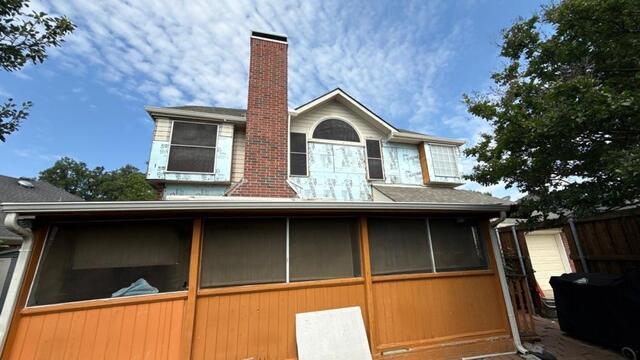
Across North Texas, many exterior restoration projects do not begin as obvious restoration projects. They begin as isolated observations. A homeowner notices a section of gutter pulling slightly away from the fascia. Someone sees a small stain near a ceiling corner after a heavy storm. A fence panel starts leaning months after strong winds moved through the neighborhood. Siding appears slightly warped during a period of extreme summer heat. None of those observations automatically feel connected. Most homeowners interpret them as separate maintenance issues because the house continues functioning normally. The roof is still overhead, the air conditioner is still cooling, and daily routines continue without major interruption.
That partial normalcy creates one of the most common misunderstandings contractors encounter throughout the DFW area. A house can remain functional while multiple exterior systems are quietly responding to the same sequence of weather events. Hail, wind, heat, humidity, and repeated drying cycles affect roofing systems, siding assemblies, gutters, attic conditions, ventilation pathways, and moisture behavior simultaneously. The homeowner usually experiences these symptoms individually. The contractor eventually sees them as part of a larger timeline. That difference in perspective often explains why restoration decisions feel more complicated than expected once a professional inspection begins.
Many homeowners are not ignoring problems. They are monitoring them. They look at a stain after a storm and decide to watch it for a while. They notice a draft near a room but assume the temperature difference is seasonal. They see minor gutter movement and believe it can wait until a future maintenance cycle. Those decisions are understandable because most houses do not reveal their full condition immediately. The visible symptom is often smaller than the underlying system behavior. By the time multiple symptoms begin appearing together, homeowners may struggle to remember exactly when each one started or which storm first caused concern. That fragmented timeline becomes part of the restoration challenge itself.
Multi-trade exterior restoration becomes necessary when several connected systems require evaluation instead of a single isolated repair. Roofing may connect to attic moisture conditions. Gutters may influence siding exposure. Ventilation behavior may affect attic humidity. Wind damage may alter how moisture enters or travels through the structure. The goal is not to make a simple issue sound larger than it is. The goal is to determine whether multiple symptoms are actually connected through a shared cause. Contractors who work in restoration environments spend significant time separating coincidence from relationship before recommending any production work.
Another reason these situations become confusing is that North Texas weather rarely applies pressure through a single event. A hailstorm may be followed by months of extreme heat. Strong winds may be followed by periods of heavy humidity. A roof system that initially appears stable may experience additional stress during seasonal temperature expansion and contraction. Homeowners often evaluate conditions based on what they can currently see. Contractors evaluate conditions based on how the house has responded across time. That distinction becomes important because restoration decisions are frequently rooted in chronology rather than appearance alone.
The restoration process therefore starts with reconstruction. Contractors attempt to reconstruct what the house has experienced. They review storm timing. They examine visible symptoms. They compare exterior conditions to attic observations. They document evidence through photographs and measurements. They ask homeowners about changes that seemed insignificant at the time. What initially appears to be a roofing question may eventually involve siding exposure, gutter performance, attic ventilation behavior, or moisture migration patterns. The inspection process exists specifically because the visible symptom and the actual source do not always occupy the same location.
Why DFW Homeowners Often Wait Before Treating the Issue as Serious
Most homeowners do not make restoration decisions immediately after noticing a symptom. They wait. Sometimes that delay lasts a few days. Sometimes it lasts an entire season. The delay is rarely caused by negligence. More often, it comes from uncertainty. The homeowner is not yet convinced the issue represents a meaningful problem. The house still feels stable. Family schedules remain busy. Insurance questions feel complicated. Daily responsibilities compete for attention. Waiting becomes a reasonable response because the evidence available at the moment feels incomplete.
A common example involves ceiling staining. A homeowner notices a faint discoloration after a storm. The stain does not expand immediately. Several dry weeks follow. The homeowner checks the area periodically and sees no obvious change. The conclusion becomes simple: perhaps the problem resolved itself. From the homeowner's perspective, the house appears to have stabilized. From the contractor's perspective, however, the absence of visible change does not automatically prove the underlying condition disappeared. Moisture events often leave behind evidence that becomes inactive until environmental conditions change again.
The same pattern appears with exterior components. A section of siding may show subtle movement after wind exposure. A gutter seam may begin separating slightly. Flashing may experience small shifts that are difficult to identify from ground level. None of these observations automatically create urgency. Homeowners frequently categorize them as future maintenance items. The reasoning is understandable because the consequences are not immediately visible. The house adapts. The homeowner adapts. Life continues normally. That period of adaptation can last far longer than most people expect.
Another factor involves storm fatigue. North Texas homeowners often experience multiple weather events within relatively short periods. After several storms, people can become desensitized to minor changes. A homeowner may remember checking the roof after one storm but struggle to remember whether a specific symptom appeared before or after a later event. The timeline becomes compressed. Small details disappear. When a contractor later asks about symptom progression, the answers may be uncertain not because the homeowner is withholding information, but because the sequence genuinely became difficult to track. This fragmented recollection is extremely common in restoration environments.
Financial considerations also influence timing. Homeowners frequently wonder whether a condition justifies a claim, a repair, continued monitoring, or a larger restoration discussion. Deductibles, budgets, and uncertainty about scope all contribute to delay. Some people postpone inspections because they fear being pressured into expensive work. Others postpone because they worry a contractor will recommend replacement when a repair might be sufficient. The result is often additional observation time while the homeowner searches for clarity. That search for certainty is a normal behavioral pattern rather than an unusual exception.
Contractors regularly encounter situations where the homeowner's story begins with a statement such as, "I thought it was minor," or "Everything seemed fine for a while." Those statements are valuable because they reveal how the house presented itself over time. The homeowner is describing perceived stability. The contractor's responsibility is to determine whether that stability was genuine or whether it represented temporary calm between weather cycles. Understanding that distinction requires evidence rather than assumptions. It also explains why inspections often uncover information that appears disconnected from the original reason for the appointment.
Visible Symptom Versus Original Entry Point
One of the most important concepts in restoration work is that visible symptoms rarely guarantee the location of the original problem. A stain may appear in one room while moisture enters somewhere else entirely. Gutter overflow may create evidence far from the initial drainage issue. Siding discoloration may reflect conditions that began above the visible area. The house distributes information imperfectly. What homeowners see is often the result of a process rather than the beginning of that process.
For example, moisture entering near a roofing penetration does not necessarily appear directly below the penetration. Water can follow decking surfaces, framing members, insulation paths, and gravity-driven routes before finally creating a visible sign. By the time a homeowner notices discoloration, the original entry point may be several feet away. Contractors therefore spend significant effort tracing pathways rather than reacting only to symptoms. The inspection is designed to follow evidence backward toward cause rather than forward from appearance alone.
This same principle applies outside the structure. A damaged gutter section may appear isolated until inspection reveals supporting fascia deterioration. Wind-related siding movement may reveal exposure patterns that connect back to roofing transitions. What initially appears to be a single-trade issue can become a multi-trade discussion once evidence begins connecting systems together. The objective is not to expand scope unnecessarily. The objective is to understand relationships before recommendations are made.
Storm Timing and Dry-Weather False Confidence
Dry weather creates confidence. That confidence is often understandable and occasionally misleading. When rain stops, symptoms frequently stop changing. Homeowners interpret the absence of new evidence as proof that conditions have improved. In many cases, the house genuinely dries and stabilizes. In other cases, the visible symptom pauses while the underlying condition remains unresolved. Distinguishing between those outcomes requires inspection rather than observation alone.
A homeowner may watch a ceiling area for weeks without noticing additional staining. During that period, moisture pathways can remain inactive simply because no triggering weather event occurs. The next significant storm may reactivate the same pathway and produce new evidence. From the homeowner's perspective, the problem appears to have returned unexpectedly. From the contractor's perspective, the event may represent continuation rather than recurrence. The difference matters because repair strategies depend on understanding whether the issue is new or ongoing.
Heat introduces another layer of complexity. North Texas summers place significant stress on exterior systems. Materials expand, contract, dry, and age under prolonged exposure. Minor vulnerabilities that seem insignificant during mild conditions can behave differently during extended heat cycles. Homeowners often associate restoration only with storms. Contractors frequently evaluate storms and environmental exposure together because both influence long-term system behavior. The weather history of the house becomes part of the inspection process rather than background information.
How Repeated North Texas Weather Pressure Changes Restoration Decisions
The challenge with multi-trade exterior restoration is that houses do not experience weather events individually. Homeowners often remember storms as separate incidents because that is how they occur on the calendar. Contractors frequently evaluate them as cumulative pressure events because the house absorbs their effects across time. A hailstorm may introduce damage. Subsequent wind events may exploit weakened areas. Extreme heat may accelerate deterioration within already stressed components. Humidity may influence moisture behavior long after visible weather activity has ended. The restoration discussion becomes more complex because each environmental event interacts with conditions left behind by previous events.
Many DFW homeowners initially evaluate their homes immediately after a storm. They walk around the property, look for obvious signs of damage, and conclude that everything appears normal. That assessment is reasonable because most people are looking for dramatic indicators. Missing shingles, visible leaks, broken windows, or major structural problems are easy to identify. The more difficult situations involve systems that remain operational while accumulating stress. The roof still sheds water. The gutters still move water away from the home. The siding still appears attached. The attic still feels relatively normal. Yet subtle changes may already be developing behind those visible observations.
Contractors often describe this as accumulated environmental pressure rather than accumulated damage. The distinction matters because not every weather event creates immediate failure. Instead, multiple environmental cycles slowly influence how systems perform. A section of flashing may experience repeated movement. Sealants may age more rapidly under prolonged heat exposure. Ventilation performance may become less efficient as conditions change within the attic. Drainage systems may gradually lose effectiveness as alignment shifts over time. No single event necessarily creates a major problem. Instead, the combined effect becomes visible months later when the homeowner begins noticing symptoms that seem unrelated to the original weather events.
This delayed visibility explains why restoration projects frequently begin with uncertainty. The homeowner remembers storms occurring. The homeowner may even remember checking the house afterward. What becomes difficult is connecting today's symptom to a sequence that unfolded gradually. The house contains its own environmental memory. Roofing materials remember exposure. Ventilation systems reflect accumulated heat cycles. Moisture pathways preserve evidence of previous intrusion. Gutters reveal long-term drainage behavior. Contractors inspect these systems not only for present conditions but also for signs of how those conditions evolved over time.
Why Heat Cycles Matter More Than Many Homeowners Realize
When homeowners think about restoration, they often focus on storms because storms feel dramatic. Heat is different. Heat acts slowly, consistently, and often invisibly. Yet North Texas heat can influence roofing systems for months at a time. Materials expand and contract daily. Sealants experience thermal stress. Ventilation deficiencies become more noticeable. Attic temperatures increase. Existing weaknesses may become more vulnerable under prolonged environmental pressure.
A homeowner may not connect attic heat to an exterior restoration discussion because the relationship is not immediately obvious. The roof remains overhead. The air conditioner continues operating. Daily life proceeds normally. During inspection, however, contractors often evaluate whether attic conditions are amplifying existing roofing concerns. Heat exposure can influence shingle aging. Ventilation deficiencies can affect moisture behavior. Airflow limitations can alter how quickly certain areas dry after weather events. The result is a house that behaves differently than expected even when visible symptoms appear minor.
This becomes especially important when hail, wind, and heat cycles overlap. A roofing system that already experienced weather-related stress may respond differently during months of intense summer temperatures. Components that appeared stable during spring may behave differently by late summer. Homeowners often interpret this as a new problem. Contractors may see it as progression of an existing condition. Determining which interpretation is correct requires evidence gathering rather than assumption.
The environmental history of the house therefore becomes part of the restoration conversation. Contractors ask questions about storm timing, previous repairs, attic conditions, and symptom progression because those details help reconstruct the sequence. The objective is not merely identifying what exists today. The objective is understanding how the house arrived at its current condition. That understanding guides recommendations more effectively than focusing on a single symptom in isolation.
Environmental Memory Inside the House
One of the most overlooked realities of restoration work is that houses retain environmental history. Homeowners naturally focus on current observations because those are easiest to see. Contractors evaluate current observations alongside evidence preserved within the structure itself.
Attic spaces often provide examples of this principle. A ceiling may appear mostly normal while the attic reveals a longer story. Moisture staining may indicate previous intrusion. Insulation compression may reveal repeated exposure. Fastener oxidation may suggest a longer timeline than the homeowner realizes. Ventilation patterns may explain why certain symptoms appear intermittently rather than continuously. The attic preserves information that the living space below may not display clearly.
This creates what many contractors call an attic-room mismatch. The room communicates one message while the attic communicates another. A homeowner standing inside a bedroom may see little reason for concern. An attic inspection above that same room may reveal evidence that changes the conversation significantly. Neither perspective is wrong. They are simply observing different parts of the same system. The restoration process exists partly to reconcile those perspectives and determine whether the visible condition accurately represents the overall condition of the house.
Environmental memory also appears through recurring patterns. Contractors frequently hear homeowners describe symptoms that seem to return under specific conditions. Perhaps a stain appears after heavy rain and then stops changing. Maybe a room feels different during periods of extreme heat. Perhaps moisture concerns seem seasonal rather than constant. These patterns matter because they reveal how the house interacts with environmental triggers. The symptom itself becomes less important than the sequence surrounding it.
Understanding those sequences helps explain why some restoration projects expand beyond the original concern. The homeowner schedules an inspection because of a ceiling stain. The contractor discovers attic evidence. The attic evidence leads to evaluation of ventilation conditions. Ventilation findings influence understanding of moisture behavior. Moisture behavior affects restoration recommendations. What began as a single symptom becomes a broader evaluation because the systems involved are connected. That progression is not scope expansion for its own sake. It is evidence-driven investigation.
How Contractors Interpret Multi-Trade Conditions During Inspection
Homeowners usually experience restoration problems through symptoms. Contractors experience them through patterns. This difference explains why professional inspections often move more slowly than expected. The objective is not simply locating damage. The objective is understanding relationships between systems before conclusions are reached.
A contractor typically begins by documenting observable conditions. Roofing components, flashing details, drainage systems, siding transitions, penetrations, and other exterior elements are evaluated systematically. Photographs are taken. Measurements are collected. Notes are recorded. The purpose of this documentation is creating an evidence trail that can later support recommendations and homeowner discussions. Contractors are trained to move from observation toward explanation rather than beginning with assumptions.
The inspection then shifts toward interpretation. Evidence is compared against symptom history. Storm timing is reviewed. Previous repair activity may be considered. Environmental exposure patterns are evaluated. Contractors ask questions because homeowner observations frequently provide missing context. A homeowner may remember when a symptom first appeared. They may recall a storm sequence. They may describe periods of apparent stability. Those details help reconstruct chronology even when exact dates are difficult to remember.
Chronology matters because restoration recommendations often depend on sequence rather than severity alone. A symptom that appears minor may represent a longer progression. A dramatic symptom may turn out to be relatively recent and isolated. Contractors therefore spend significant effort reconstructing timelines. The goal is determining whether visible evidence reflects a new condition, a progressing condition, or a reactivated condition that has existed longer than initially believed.
Attic Evidence Contractors Slow Down Around
Experienced contractors often become more cautious when attic observations fail to match room-level observations. The reason is simple: hidden evidence frequently changes the interpretation of visible symptoms.
For example, a homeowner may report a small ceiling stain that appears insignificant. Inside the attic, the contractor may discover moisture staining extending beyond the visible area. Insulation may reveal previous wetting. Fasteners may show oxidation patterns. Ventilation behavior may suggest environmental conditions that contribute to recurring symptoms. None of these observations automatically indicate major restoration work. However, they often justify additional investigation before recommendations are finalized.
Contractors slow down around these situations because premature conclusions can create mistakes. If visible symptoms and hidden evidence disagree, the disagreement itself becomes important. The inspection process exists to resolve those discrepancies through documentation and analysis. Homeowners sometimes expect immediate answers. In reality, the most reliable recommendations often emerge after evidence has been compared across multiple systems.
Another reason attic evidence receives significant attention is that it helps distinguish between active and historical conditions. Not every stain indicates an ongoing problem. Not every historical moisture event requires extensive restoration. Contractors evaluate context. They look for indicators of activity, progression, environmental influence, and system interaction. The objective is clarity rather than escalation.
Hidden Moisture, Attic Conditions, and HVAC Interaction Often Change the Restoration Conversation
Many homeowners expect exterior restoration discussions to stay outside the house. They assume roofing concerns belong on the roof, siding concerns belong on the walls, and gutter concerns belong along the drainage system. During inspection, however, contractors frequently discover that exterior conditions are influencing interior systems in ways homeowners do not immediately recognize. The most common connection points involve moisture behavior, attic conditions, ventilation performance, and HVAC operation. These systems are often discussed separately, but the house experiences them as part of a single environment.
This interconnected behavior explains why contractors sometimes expand an inspection beyond the original symptom. A homeowner may schedule an appointment because of a roof concern. During the inspection, evidence suggests attic humidity is contributing to the observed condition. Additional evaluation reveals airflow limitations or environmental patterns affecting how the attic responds to seasonal weather. What initially appeared to be a straightforward roofing discussion becomes a broader conversation about how multiple systems are interacting. The contractor is not changing the subject. The evidence is changing the scope of understanding.
One of the most misunderstood concepts in restoration work is that moisture does not always behave dramatically. Homeowners often imagine active dripping water when they hear the word moisture. In reality, moisture can exist in subtler forms. Humidity accumulation, intermittent condensation, environmental exposure, and slow migration patterns may all influence conditions inside a structure. These processes frequently leave evidence long before they create obvious symptoms. Contractors look for those indicators because they help explain why some problems appear inconsistent or difficult to diagnose.
The attic plays an important role because it sits between exterior exposure and interior living space. Roofing systems protect it. Ventilation systems influence it. Temperature changes affect it. Moisture behavior often passes through it. As a result, attic conditions frequently provide context that homeowners cannot easily observe from inside the home. An attic inspection may reveal evidence that helps explain room-level symptoms that otherwise seem disconnected. This is one reason attic evaluations remain a recurring component of contractor-native restoration inspections.
Homeowners are often surprised when contractors spend significant time documenting attic conditions. They may wonder why insulation, ventilation pathways, decking surfaces, or fastener conditions receive attention when the original concern involved an exterior symptom. The answer is that these observations help reconstruct the story of the house. Contractors are gathering evidence about how environmental conditions have interacted with the structure over time. That evidence helps separate isolated issues from conditions that may involve multiple systems.
The Difference Between Visible Moisture and Moisture Behavior
A common restoration mistake occurs when homeowners focus exclusively on visible moisture. If no water is actively present, the assumption becomes that moisture is no longer relevant. Contractors evaluate moisture differently. They often focus on moisture behavior rather than moisture visibility.
Moisture behavior includes questions such as: Where would water travel if it entered the structure? How quickly would an area dry? Which components retain evidence longer than others? How do ventilation conditions influence drying cycles? What environmental triggers reactivate previous pathways? These questions matter because moisture-related conditions frequently evolve over time rather than presenting themselves as a single event.
For example, a homeowner may notice a ceiling stain after a storm. Several dry weeks pass. The stain does not change. The homeowner concludes that the issue has stabilized. During inspection, contractors may discover attic evidence indicating previous moisture movement beyond the visible area. The visible symptom remained static, but the environmental history remained present. The difference between appearance and behavior becomes central to understanding the condition accurately.
This distinction is particularly important in North Texas because environmental conditions fluctuate dramatically. High heat, humidity shifts, storm cycles, and drying periods all influence how moisture behaves within a structure. Conditions that appear resolved during one season may behave differently during another. Contractors therefore evaluate environmental context alongside physical evidence rather than treating either factor independently.
HVAC Systems Sometimes Reveal Clues Homeowners Miss
HVAC systems often enter restoration discussions indirectly. A homeowner may not believe their cooling system has anything to do with a roofing or exterior concern. Yet contractors frequently evaluate HVAC-related observations because attic conditions and airflow patterns can influence how the home performs as a whole.
An attic experiencing excessive heat or poor ventilation may affect the environment surrounding HVAC components. Humidity behavior can influence comfort perceptions. Airflow conditions may change how certain areas of the home feel during different seasons. These observations do not automatically indicate HVAC problems. Instead, they often provide additional evidence about how the house is responding to environmental pressures.
Homeowners sometimes report symptoms that initially seem unrelated to exterior restoration. A room feels warmer than expected. Certain areas become uncomfortable during summer afternoons. Seasonal humidity seems different than before. These observations may not originate from the HVAC system itself. They may reflect broader interactions occurring between roofing components, attic conditions, ventilation performance, and environmental exposure. Contractors therefore document these observations because they contribute to understanding overall house behavior.
The goal is not to transform every restoration project into a mechanical-system discussion. The goal is recognizing when environmental evidence crosses system boundaries. Houses function as integrated environments. Roofing systems influence attic conditions. Attic conditions influence temperature behavior. Ventilation affects drying potential. Moisture influences materials. Contractors investigate these relationships because they often explain symptoms that otherwise appear inconsistent.
Why Attic-Room Mismatch Creates So Much Confusion
One of the most important realism concepts in restoration work is attic-room mismatch. This occurs when visible room conditions fail to accurately reflect attic conditions. Homeowners naturally trust what they can see. Contractors know that hidden evidence sometimes tells a different story.
A bedroom ceiling may appear mostly normal while attic observations suggest a longer environmental history. The homeowner is not wrong. The contractor is not wrong. They are simply observing different evidence sources. Restoration decisions become challenging because both perspectives feel reasonable. Homeowners focus on visible stability. Contractors focus on evidence continuity. The inspection process exists to reconcile those perspectives before conclusions are reached.
Contractors frequently encounter situations where attic evidence explains symptoms that homeowners considered unrelated. Moisture staining may reveal historical pathways. Ventilation observations may explain recurring seasonal discomfort. Insulation conditions may reveal environmental exposure patterns. Fastener oxidation may suggest a longer timeline than expected. None of these observations independently determine scope. Together, however, they help build a more complete understanding of house behavior.
This evidence-driven approach often changes homeowner expectations. Many people begin inspections expecting confirmation of a specific concern. Instead, they receive an explanation of how multiple systems interact. The process can feel more complex than anticipated because houses rarely organize evidence according to trade categories. Roofing evidence may influence ventilation discussions. Moisture evidence may affect restoration planning. Environmental observations may shape timing recommendations. Contractors follow those relationships because the house itself creates them.
Insurance Documentation Becomes More Difficult When Timelines Are Unclear
Insurance-related restoration conversations frequently become complicated for a reason that has little to do with paperwork. The primary challenge is often chronology. Homeowners remember symptoms. Contractors document evidence. Insurance carriers evaluate documentation. The quality of the timeline connecting those elements can significantly influence how smoothly the process unfolds.
Many homeowners struggle to reconstruct exact sequences once multiple weather events occur. They remember noticing a symptom. They remember checking the house after a storm. They remember discussing concerns with family members. What becomes difficult is determining which observation happened first and how conditions changed afterward. This uncertainty is normal. Most people do not maintain detailed records of symptom progression unless they already suspect a significant issue.
Contractors therefore spend considerable time documenting observations during inspections. Photographs, notes, measurements, and walkthrough discussions help create a clearer record. The objective is not merely supporting insurance discussions. Documentation also improves decision quality. Homeowners can compare evidence more effectively when observations are organized systematically. Contractors can explain findings more clearly. Insurance conversations become more productive because the available information is stronger.
Photo Documentation and Homeowner Walkthrough Logic
One of the most valuable aspects of restoration inspections is the homeowner walkthrough. Contractors frequently photograph conditions and then explain what those photographs mean within the broader context of the inspection. This process helps bridge the gap between homeowner observations and contractor interpretation.
A photograph by itself rarely tells the full story. Homeowners may see an image without understanding why it matters. Contractors use walkthroughs to explain relationships between evidence sources. A photograph of flashing movement may connect to moisture observations. An attic image may explain a room-level symptom. Drainage evidence may help clarify siding exposure concerns. The walkthrough transforms isolated observations into a coherent narrative.
This approach also improves trust because recommendations become easier to understand. Homeowners are not asked to accept conclusions without evidence. They can review documentation, ask questions, and follow the logic behind the inspection process. Restoration decisions become less dependent on opinion and more dependent on observed conditions.
Why Repair Fatigue and Previous Patch History Often Influence Restoration Decisions
By the time many homeowners schedule a multi-trade restoration inspection, they are not evaluating a house that has never received attention. More often, they are evaluating a house that has already been monitored, repaired, adjusted, patched, sealed, or stabilized at various points in its history. Those previous actions become part of the restoration conversation because contractors need to understand not only what the house is doing today, but also how it has responded to previous attempts at correction.
Repair fatigue is a common reality throughout DFW. Homeowners may have addressed a symptom once and expected the issue to remain resolved. Months later, another symptom appears. A different contractor may have evaluated a separate concern. A gutter adjustment may have occurred after a wind event. A roof repair may have followed a hailstorm. None of these actions are necessarily mistakes. In many cases they were reasonable responses based on the evidence available at the time. The challenge arises when multiple repairs exist across multiple systems and the current condition no longer reflects a single event.
Homeowners often describe this experience in similar ways. They explain that they thought the issue had already been addressed. They mention that the house seemed stable for a period of time. They remember previous recommendations but are uncertain how those recommendations connect to the current situation. These conversations are valuable because they help contractors reconstruct the chronology of the property. Restoration work frequently depends on understanding what happened before the current inspection rather than focusing exclusively on present-day symptoms.
Contractors therefore spend considerable time reviewing repair history. They evaluate whether visible conditions align with previous work. They compare current observations to known environmental pressures. They look for evidence suggesting that a condition has progressed, reactivated, or simply revealed information that was previously hidden. This process is not about assigning blame to earlier decisions. It is about determining whether the current evidence supports continued repair, broader restoration, additional monitoring, or another path entirely.
The difficulty is that homeowners often remember outcomes more clearly than sequences. They remember that a repair occurred. They remember that a symptom disappeared. They remember that the house seemed fine afterward. What becomes harder to recall is exactly when conditions changed, how long stability lasted, and whether new symptoms emerged gradually or suddenly. This fragmented recollection is one reason restoration inspections frequently involve detailed questioning about timelines and environmental events.
Previous Patches Do Not Automatically Mean Previous Failure
A common misconception is that evidence of previous repairs automatically indicates poor workmanship. Contractors do not approach inspections with that assumption. A repair may have been entirely appropriate when it was performed. Conditions change. Weather exposure changes. Environmental pressures change. The house itself changes.
For example, a repair designed to address a localized issue may perform exactly as intended while unrelated environmental conditions continue evolving elsewhere. A homeowner later notices a new symptom and assumes the previous repair failed. Inspection may reveal that the original repair remains functional while a separate condition has emerged nearby. Without chronology and documentation, these distinctions can be difficult to recognize.
This is particularly true in North Texas because repeated weather cycles create cumulative stress. A repair performed after one storm season may later experience additional environmental pressure from subsequent storms, wind events, heat cycles, and humidity changes. Contractors evaluate the current evidence rather than relying solely on assumptions about the original condition. The objective is understanding what the house is doing now and why it is doing it.
Repair history also helps contractors evaluate decision pathways. A homeowner who has repeatedly addressed isolated symptoms may eventually reach a point where broader restoration evaluation becomes appropriate. That conclusion is not driven by the number of repairs alone. It is driven by evidence showing how conditions interact across systems. Roofing observations may connect to attic conditions. Attic observations may connect to ventilation performance. Drainage behavior may influence siding exposure. The house ultimately determines whether isolated repairs remain appropriate or whether a larger evaluation becomes necessary.
Why Contractors Reconstruct Environmental Timelines
One of the most important skills in restoration work is environmental timeline reconstruction. Contractors often spend as much time understanding sequence as they spend evaluating visible evidence. This may surprise homeowners who expect inspections to focus primarily on physical conditions.
The reason chronology matters is that houses behave differently across time. A symptom observed immediately after a storm may carry a different meaning than the same symptom observed months later. Environmental triggers influence how evidence appears, disappears, and reappears. Heat cycles, rainfall patterns, humidity fluctuations, and seasonal changes all affect house behavior. Contractors therefore attempt to reconstruct the timeline surrounding the symptom rather than evaluating the symptom in isolation.
A homeowner may remember noticing a stain after spring storms. The stain then remained unchanged throughout a dry summer period. Fall weather introduced new symptoms. Winter conditions appeared stable again. The homeowner experiences these observations as separate events. Contractors may see them as chapters within a continuous environmental sequence. Understanding that sequence often determines whether stabilization remains appropriate or whether further action becomes necessary.
Timeline reconstruction also helps explain why some conditions appear unpredictable. Homeowners sometimes describe issues that seem to come and go without warning. Contractors frequently discover that environmental triggers are responsible for the apparent inconsistency. Rain activates one pathway. Heat influences another. Humidity changes alter drying behavior. The symptom feels random to the homeowner because the environmental relationships are not immediately visible. The inspection process helps uncover those relationships.
Why Stabilization Is Not the Same as Resolution
One of the most important restoration concepts homeowners encounter is the distinction between stabilization and resolution. The two terms are often treated as interchangeable even though they describe different outcomes. Stabilization means the immediate concern has been controlled. Resolution means the underlying condition has been fully addressed. Contractors spend significant time explaining this distinction because misunderstanding it often leads to confusion later.
When a house experiences a leak, for example, emergency measures may successfully stop active water intrusion. The homeowner understandably feels relieved because the visible problem appears solved. The room dries. Daily routines return to normal. The house feels stable again. Those observations are real and important. They simply do not guarantee that every contributing factor has been evaluated.
The stabilization-reactivation pattern appears frequently in restoration work. A condition becomes active. Temporary measures restore stability. Environmental pressure decreases. Symptoms disappear. Later, a new weather event reactivates the same underlying pathway. The homeowner experiences the situation as a surprising return of a previously resolved problem. Contractors often recognize it as evidence that stabilization occurred without complete resolution.
This does not mean stabilization lacks value. In many situations stabilization is exactly the correct first step. Protecting the home, preventing additional damage, and restoring immediate safety are essential objectives. The challenge arises when temporary calm is interpreted as proof that no additional evaluation is necessary. Contractors therefore continue investigating after stabilization because the absence of symptoms alone may not reveal the entire condition.
The Calm Period That Creates False Confidence
Perhaps the most difficult phase of restoration work is the calm period that follows a symptom. Nothing appears wrong. No visible changes occur. The homeowner stops thinking about the issue. Life returns to normal.
From a psychological perspective, this reaction is understandable. Humans naturally respond to current evidence. If no evidence is visible, concern decreases. Contractors recognize that houses sometimes behave differently. Environmental conditions may temporarily conceal ongoing vulnerabilities. The house may simply be waiting for another trigger.
This is why restoration recommendations frequently emphasize evidence rather than urgency. Contractors are attempting to determine whether the apparent calm reflects genuine stability or merely the absence of triggering conditions. That determination requires documentation, inspection, chronology reconstruction, and environmental analysis. It cannot be made reliably through observation alone.
Many homeowners are relieved when inspections reveal that conditions truly are stable. Others discover evidence suggesting additional action would be prudent. Both outcomes are valuable because they replace uncertainty with information. The purpose of the restoration process is not to create concern. It is to reduce uncertainty through evidence-based evaluation.
Preparing for a Production Decision
Eventually every restoration discussion reaches a decision point. The homeowner must determine whether continued monitoring, targeted repairs, broader restoration, insurance involvement, or another course of action makes the most sense. Contractors help support that decision by organizing evidence into a clear framework.
The strongest restoration decisions are rarely driven by fear. They are driven by clarity. Homeowners understand what was observed. They understand how systems interact. They understand what remains uncertain and what has been verified. Documentation, photographs, inspection findings, chronology reconstruction, and environmental context all contribute to that clarity.
By the time the production discussion begins, the goal is no longer simply identifying symptoms. The goal is understanding the relationship between weather exposure, house behavior, hidden evidence, repair history, environmental conditions, and future risk. Multi-trade restoration becomes easier to understand when viewed through that broader lens. The house is no longer a collection of separate symptoms. It becomes a connected system responding to years of environmental pressure, maintenance decisions, repairs, and weather events.
Stabilization Before Production: How Contractors Help Homeowners Move From Uncertainty to Clarity
By the time a multi-trade exterior restoration inspection reaches its final stages, most homeowners are no longer asking whether a symptom exists. Instead, they are trying to understand what that symptom means within the larger context of the house. This transition is important because restoration decisions become more reliable when they are based on evidence rather than assumptions. The goal is not simply identifying damage. The goal is understanding the relationship between environmental exposure, system interaction, repair history, inspection findings, and future performance.
Contractors therefore spend considerable effort organizing information into a sequence homeowners can follow. Roofing observations are compared against attic findings. Moisture behavior is evaluated alongside environmental history. Ventilation conditions are reviewed in context with seasonal exposure. Previous repairs are considered together with current evidence. Documentation is assembled so that homeowners can see how individual observations connect. The objective is not creating a larger project. The objective is reducing uncertainty.
Many homeowners enter the inspection process believing the final recommendation will be obvious. Sometimes it is. In other cases, the house presents mixed signals. Certain systems appear stable while others show evidence of progression. Some observations support monitoring. Others support corrective action. Contractors therefore rely on evidence thresholds rather than assumptions. Recommendations become stronger when they are tied directly to documented conditions rather than generalized concerns.
This evidence-first approach is particularly valuable in DFW because overlapping weather cycles can make house behavior difficult to interpret. Hail, wind, heat, humidity, and seasonal reactivation often create conditions that evolve gradually rather than dramatically. Homeowners may struggle to determine whether a symptom represents a temporary condition or a developing problem. The inspection process helps answer that question by comparing visible observations against hidden evidence and environmental context.
What Contractors Evaluate Before Recommending Production
Before any production decision is made, contractors typically work through a sequence of questions. The first question is whether the visible symptom accurately reflects the condition of the house. If attic observations, moisture evidence, or environmental indicators tell a different story, additional investigation may be necessary. Contractors avoid making recommendations based solely on what is immediately visible because houses frequently conceal important information within interconnected systems.
The second question involves chronology. Contractors evaluate whether the condition appears isolated, progressive, reactivated, or connected to previous environmental events. Understanding sequence helps determine whether stabilization remains sufficient or whether a broader solution should be considered. A symptom that has remained unchanged for years may require a different response than one that is actively progressing through repeated weather cycles.
The third question concerns interaction. Contractors assess whether multiple systems are influencing each other. Roofing, drainage, ventilation, siding, attic conditions, and moisture behavior are rarely evaluated in isolation during restoration work. The inspection process identifies relationships that may not be obvious from a ground-level perspective. These relationships often explain why symptoms appear inconsistent or difficult to diagnose.
Finally, contractors evaluate documentation quality. Strong decisions require strong evidence. Photographs, measurements, inspection notes, environmental observations, homeowner recollections, and visible conditions are all reviewed together. When the evidence clearly supports a conclusion, recommendations become easier to explain and easier for homeowners to evaluate confidently.
Why Homeowner Walkthroughs Matter
One of the most important stages of the restoration process is the walkthrough. Contractors often spend significant time explaining what was observed and why those observations matter. Homeowners benefit because they gain visibility into conditions that are normally hidden. Contractors benefit because recommendations can be tied directly to evidence rather than abstract descriptions.
During a walkthrough, homeowners frequently discover that the issue they noticed was only one piece of a larger story. A ceiling stain may connect to attic observations. A gutter concern may connect to drainage behavior. Ventilation evidence may help explain environmental patterns. These relationships are easier to understand when documentation accompanies the explanation.
Walkthroughs also create an opportunity for homeowners to contribute information. Questions often trigger memories about previous storms, repairs, seasonal changes, or symptom progression. Those recollections may help clarify chronology and improve understanding of the condition. Restoration decisions become stronger when contractor evidence and homeowner experience are evaluated together rather than separately.
Trust is often built during this stage because homeowners can see how conclusions were reached. The discussion shifts away from sales language and toward evidence review. Recommendations become easier to evaluate because the reasoning behind them is visible. Contractors are not simply presenting a conclusion. They are demonstrating how the available information supports that conclusion.
Why Multi-Trade Restoration Often Requires a Broader Perspective
Many homeowners initially approach restoration through a single-trade lens. They believe they have a roofing issue, a siding issue, a gutter issue, or a moisture issue. During inspection, contractors sometimes discover that the house is responding through multiple systems simultaneously. The original concern remains important, but it may not exist independently from surrounding conditions.
This broader perspective helps explain why restoration recommendations occasionally feel more comprehensive than homeowners expected. Contractors are not attempting to complicate the situation. They are attempting to align recommendations with the actual behavior of the house. If multiple systems are influencing each other, evaluating only one component may leave important questions unanswered.
The goal of multi-trade restoration is not maximizing scope. The goal is improving understanding. Houses are interconnected environments. Roofing systems influence attic conditions. Ventilation affects environmental behavior. Moisture follows pathways rather than trade categories. Drainage performance affects exposure patterns. Contractors therefore investigate relationships rather than focusing exclusively on isolated symptoms.
North Texas weather reinforces the importance of this approach. Repeated hail, wind, heat, and humidity cycles create conditions that evolve gradually. Homeowners often experience the resulting symptoms individually. Contractors frequently discover that those symptoms share common environmental roots. Restoration becomes easier to understand when viewed through the lens of system interaction rather than symptom isolation.
Frequently Asked Questions About Multi-Trade Exterior Restoration
How do I know whether my issue is isolated or part of a larger restoration concern?
The answer usually depends on evidence rather than symptoms alone. Some issues are truly isolated and can be addressed independently. Others involve relationships between roofing, drainage, ventilation, moisture, or exterior components. A professional inspection helps determine whether the visible symptom accurately reflects the overall condition of the house.
Why would a contractor inspect my attic when I called about an exterior problem?
Attics often preserve evidence that is not visible from inside the home. Moisture behavior, ventilation performance, insulation conditions, decking observations, and environmental history can all help explain symptoms that appear elsewhere. Contractors inspect attic spaces because they frequently provide context that improves decision quality.
Can a house appear stable even when underlying conditions still exist?
Yes. Stabilization and resolution are not always the same thing. A symptom may stop changing because environmental triggers are temporarily absent. Future weather events may reveal whether the condition was fully resolved or simply inactive during a calm period. Contractors evaluate evidence to determine which explanation is more likely.
Why do contractors ask so many questions about previous storms and repairs?
Chronology helps explain how conditions developed. Storm timing, repair history, symptom progression, and environmental exposure all contribute to understanding current observations. Restoration recommendations are often more accurate when contractors understand the sequence that led to the present condition.
Does every restoration issue require insurance involvement?
No. Insurance discussions depend on the specific circumstances, available documentation, policy details, and inspection findings. Contractors typically focus first on documenting conditions and helping homeowners understand the evidence before discussing potential insurance considerations.
Conclusion
Multi-trade exterior restoration is often misunderstood because homeowners experience houses through symptoms while contractors evaluate them through systems, evidence, and chronology. A ceiling stain, gutter concern, siding issue, ventilation question, or moisture observation may appear unrelated when viewed individually. During inspection, those same observations sometimes reveal connections created by years of environmental exposure, weather cycles, repairs, and house behavior.
DFW homeowners frequently encounter this challenge after hail, wind, and heat cycles overlap. The house adapts. The homeowner adapts. Symptoms appear, disappear, stabilize, and occasionally reactivate. What seems like a simple exterior concern can become a broader discussion about roofing systems, attic conditions, moisture behavior, ventilation performance, drainage pathways, and environmental history.
The purpose of the restoration process is not to increase complexity. It is to reduce uncertainty. Through inspection, documentation, chronology reconstruction, attic evaluation, environmental analysis, and homeowner walkthroughs, contractors help transform isolated observations into a clearer understanding of how the house is actually performing.
When homeowners understand that difference, restoration decisions become less about reacting to symptoms and more about responding to evidence. That clarity ultimately leads to better decisions, more realistic expectations, and a stronger understanding of what the house is communicating after years of North Texas weather exposure.