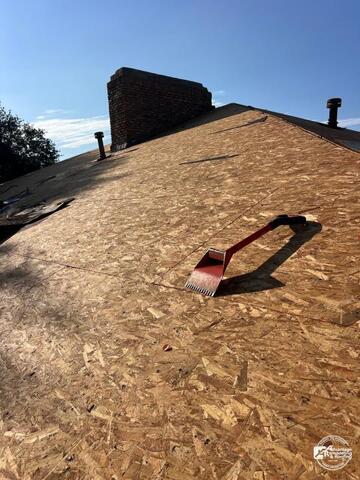
Earlier repairs or reroofing can be important after a new storm, but they are context rather than a verdict. The useful question is not “was this area repaired before?” It is “what changed before, what is visible now, and how do the old-work locations line up with the current observations?” Mapping those layers keeps the new storm review from automatically blaming or clearing the earlier work.
Put the old work on a map before discussing the new condition
Collect the dates and locations of earlier work that can be supported by records, photographs, invoices, or other reliable information. Identify whether the work was localized or broader. If the exact limit of an old repair is uncertain, show the uncertainty rather than drawing a precise boundary from memory.
This gives the current inspection a reference. A new observation near old work can be compared with that history without assuming a causal relationship.
Describe today’s condition in present tense
Record what is visible now as a current observation. Do not backdate a crack, stain, lifted component, or other condition to the earlier repair simply because it is close to that repair. Likewise, do not assume the new storm created it merely because the condition was noticed afterward.
The current description should be able to stand on its own: location, date, visible condition, and any safely observed connected evidence.
Use the overlap to sharpen inspection questions
When current observations overlap or sit near earlier work, ask questions that can be inspected. What material or interface exists at the old-work boundary? Is the current condition inside, outside, or across that boundary? Is the relevant assembly visible, or is part of it concealed? Did the earlier work change the way the new area should be accessed or repaired?
These questions make the old history useful without requiring the homeowner to decide the answer first.
Keep the new storm scope tied to current findings
A proposal after the storm should identify the present property findings it addresses. Old work may affect method, access, compatibility, or interpretation, but it should not automatically enlarge or shrink the storm-related scope. If a scope item depends on an assumption about an earlier repair, make the assumption visible.
Coverage decisions belong to the insurer when applicable, product decisions to the manufacturer when applicable, engineering opinions to the engineer, and other official or owner decisions to those responsible parties. Earlier work history can support the question but cannot substitute for those decisions.
Write a handoff when later access reveals something new
Concealed conditions may become visible only after work begins or an area is opened safely. If the new discovery materially changes the question, document its location and how it differs from what was known before. Then connect any proposed scope change to that new finding.
A written handoff prevents the project from quietly rewriting the earlier history. It also distinguishes a later discovery from a condition that was verified during the first storm inspection.
Do not let uncertainty around old work become a shortcut
If the exact material, installation detail, or prior repair method cannot be confirmed, keep it open. The answer may require product records, qualified evaluation, or safe access. Avoid phrases that treat “old repair” as a diagnosis.
The same restraint applies to cause. A new event can provide timing context, while the property evidence still has to support what happened at the specific location.
Ask the earlier-work questions that can change today’s method
Old work matters most when it changes a current decision. Ask what material was installed, where the prior repair begins and ends, whether a transition or interface was altered, and whether reliable records show how the work was performed. If the answer to any of those questions is unknown, mark it as unknown instead of assuming the earlier method from the current appearance.
The current contractor can then explain whether the proposed storm-related work depends on any of those historical details. If it does, identify what must be verified before the method is final. If it does not, the old work can remain useful background without controlling the new scope.
This approach also helps with handoffs between contractors. The new reviewer does not need to criticize or defend the earlier work in order to inspect the present condition. The task is to understand which old facts are relevant to today’s interface, access, material, or scope question and which facts are simply part of the roof’s history.
If the earlier contractor’s records are incomplete, do not let that absence become either criticism or approval of the old work. Treat it as a documentation gap. The current inspection can still describe the visible condition, identify the old-work boundary as well as possible, and decide what additional access or product information is needed for today’s method. The new project should stand on present evidence.
End with two maps that can be compared
By the end of the review, the homeowner should have an old-work map and a current-condition map. The overlap between them identifies where questions deserve attention. The non-overlap can be equally useful because it shows that the current concern is not simply a copy of the old project boundary.
Earlier work changes the investigation by making the questions more precise. It should not predetermine the answer. When dates, locations, current observations, concealed limits, and later discoveries remain distinct, the new storm scope can be based on present property findings while the roof’s earlier history remains accurate context.
Those two maps become even more useful if storm-damage conditions keep changing after clear weather or when Plano seasonal weather context for the roof record identifies dates worth comparing with the current locations.