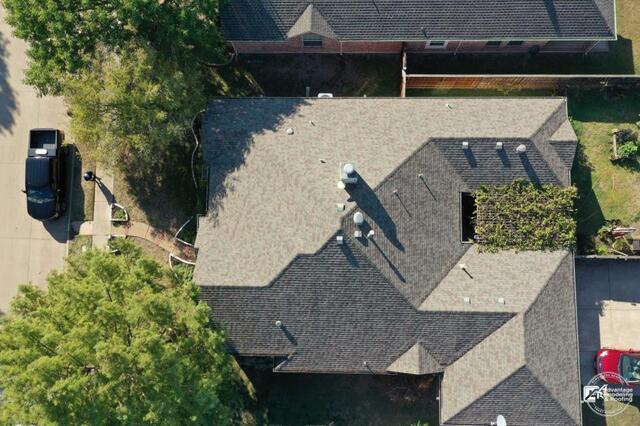
A seasonal recap is useful when it helps a homeowner decide where to look next. It should combine dated weather context with exact property observations, roof orientation or location, quiet intervals, and known gaps. It should not turn regional weather into proof that a particular property was damaged.
The recap becomes more valuable if it identifies storm-damage roof conditions that kept changing after the weather cleared, because the homeowner can return to the same mapped locations instead of treating the season as a single event.
Build the season in date order
Start with a simple chronology. Add significant weather dates that matter to the homeowner’s review, then place property observations on their own dates. Include inspections, temporary work, repairs, quiet periods, and later rechecks. If a property observation was first noticed days or weeks after a weather event, preserve the actual observation date rather than moving it backward to the weather date.
This separation keeps the recap accurate and prevents timing from becoming a substitute for property evidence.
Add roof orientation and exact property locations
Weather context becomes more useful when the property observations are tied to places that can be found again. Identify roof planes or exterior areas consistently. Interior or attic observations should have equally stable location labels when they are relevant to the same review.
The recap can then show that one location changed several times while another remained quiet, or that observations appeared in separate areas that should not automatically be treated as one pattern.
Keep the source of weather information visible
The homeowner should be able to tell where the weather context came from and what it actually says. Regional hail, wind, or storm information can help prioritize dates or directions for inspection. It cannot establish what occurred on a specific roof without supporting property observations.
If the available weather information is broad or incomplete, say so. A recap gains credibility by showing the limits of its sources.
Compare recurrence with quiet intervals
A season is more informative when it records the periods in which nothing changed. If an observation appears, becomes quiet, and later returns at the same location, that sequence deserves attention. If a suspected area remains unchanged through later weather, that quiet interval is also useful comparison evidence.
Neither recurrence nor quiet proves a cause. They help identify which locations deserve another look and which questions can remain lower priority for the moment.
Use the recap to rank inspection questions, not diagnoses
At the end of the season, group locations by what the record shows. A location with repeated change may deserve earlier reinspection. A location with one stable observation may be monitored. A concealed or unsafe-to-access area stays unresolved. A location with inconsistent or uncertain notes may need a cleaner baseline before any conclusion is attempted.
This kind of prioritization is practical because it follows observed change rather than the severity of a regional weather report.
Add the missing-information column
Every recap should show what is not known. Missing photos, uncertain dates, inaccessible roof areas, unknown details from earlier work, or concealed assemblies can be listed beside the related location. Those gaps become part of the next inspection plan.
Specific cause remains open when the property evidence does not establish it. Questions controlled by a manufacturer, insurer, engineer, official, or owner remain with that party when applicable.
Name the event that will reopen each location
A recap becomes actionable when each important location has a trigger. That trigger might be a same-location recurrence, a new connected observation, visible change after later weather, a condition becoming active again, temporary work no longer holding, or safe access to a previously concealed area.
The trigger should be observable. “If another storm happens” is too broad; “if the same ceiling area changes after later weather” creates a specific reason to recheck.
Turn the recap into a location-by-date table
A compact table can make the season easier to scan. Put stable property locations down one side and key dates across the other, then record only the observation that belongs in each cell. Some cells will be blank, some will show a quiet check, and others will show a change. A separate note can identify the weather context for the date without placing a storm label inside every property cell.
The table is useful because it reveals recurrence. One roof plane may have several documented changes while another has none. An interior location may appear only once. A concealed area may remain unresolved through the entire season. Those differences help prioritize the next inspection.
Do not treat the densest row as proof of cause. The table shows where observations cluster in time and place. It is an inspection aid. The property evidence and any qualified evaluation still determine what those observations mean. Used this way, the recap remains practical without becoming a diagnosis disguised as a spreadsheet.
Keep the recap focused on decisions the homeowner can actually make from the record. The season may support rechecking one location, preserving another as a baseline, or seeking safe access to a concealed area. It does not need to end with a property-wide verdict. A short prioritized agenda is often more useful than a strong conclusion because it directs the next inspection toward the places where new evidence would matter most.
Finish the season with a short inspection agenda
The final page does not need to declare what every weather event did. It should list the locations that deserve attention, the dates and observations that support that priority, the quiet intervals that provide comparison, and the missing information that would most improve the next review.
For a Plano homeowner, that turns a season of scattered weather memories into a property-based inspection tool. The weather gives context, the locations give structure, and the repeated or quiet observations show where another look is most likely to add useful information.