Roof Replacement in Wylie, TX
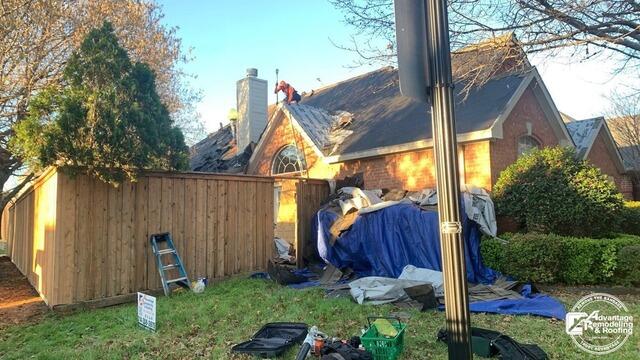
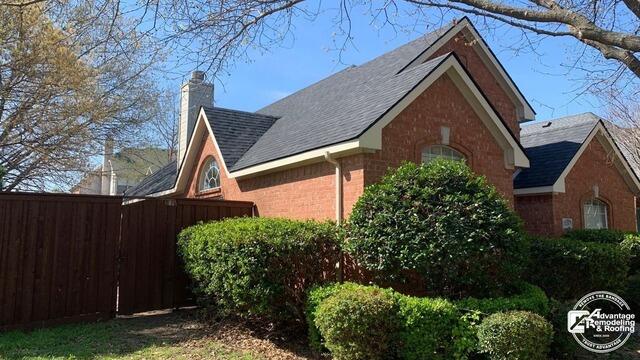
A side-yard viewpoint gives this Wylie roof replacement a very different story from a typical straight-on front-elevation comparison. The brick home is framed by a tall wood fence, mature trees, large shrubs, and a prominent chimney. Because the photographs are taken from nearly the same part of the property, the fence line, landscaping, brick gables, and chimney provide reliable visual anchors while the condition of the roof changes dramatically between the two images.
The Before photograph captures the roof during active work. Large portions of the visible roof have been stripped back, workers are positioned on the slopes, and material from the project is gathered below. Blue and light-colored protective coverings are visible near the house, with loose roofing debris occupying part of the yard. The scene makes the temporary disruption of a roof replacement visible in a way that a finished beauty shot cannot. It also shows how close the work zone can be to fences, bushes, trees, and other established parts of a residential property.
The After image is much quieter. The roof is covered by a dark, uniform finished surface that follows the main slope, the smaller gabled section, and the roof area around the chimney. The same brick walls and landscaping remain in view, which makes the finished roof easy to compare with the active-work stage. Instead of crew activity and exposed work areas drawing attention, the eye follows the clean roof planes and the sharp lines where the roof meets the white trim and brick exterior.
For homeowners in Wylie, the paired view is useful because it puts roof replacement in the context of an occupied, landscaped property. A roofing project is not performed in isolation from the rest of the exterior. Access, material handling, temporary protection, and the space around the house all become part of what a homeowner sees while the work is underway. The first photograph captures that reality directly. The second shows the property after the visible work zone has cleared and the roof again functions as part of the home's overall appearance.
The architecture also gives the comparison more detail than a simple old-roof/new-roof color change. The house includes a large main gable, a smaller projecting gable with an arched window, a chimney rising through the roof, and adjoining roof planes at different depths. A homeowner studying a finished replacement can look at how consistently the roofing surface carries across those separate areas and how the roof edges relate to fascia, trim, masonry, and the chimney. None of those visible details proves a particular product or installation specification, but together they help explain what to examine when reviewing completed exterior work.
The seasonal character of the photos adds another useful visual dimension. Bare branches and established evergreens frame the roofline, while the strong sunlight in the completed image makes the surface and edges easy to read. The finished roof appears orderly against a property that already has a lot of visual texture from brick, wood fencing, shrubs, and trees. That contrast helps the roof feel integrated rather than visually busy.
This Wylie Before and After set ultimately documents a transition from a clearly active replacement site to a composed residential exterior. The Before view makes the labor and temporary job conditions visible; the After view brings attention back to the home itself. For someone planning roof replacement in Wylie, the photographs offer a grounded way to think about the project: look beyond a single close-up of roofing material and consider the whole visible setting, including roof shape, chimney intersections, neighboring exterior features, landscaping, and the condition of the property once the work area is gone.