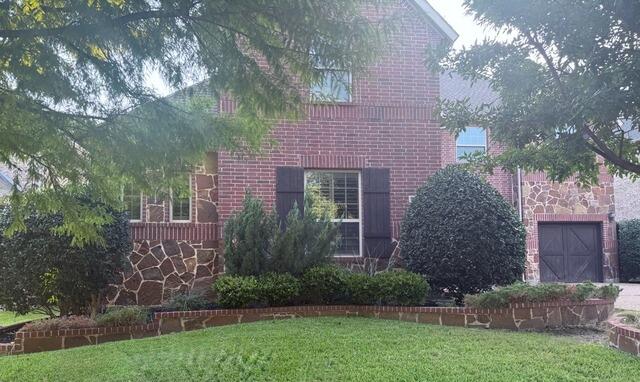
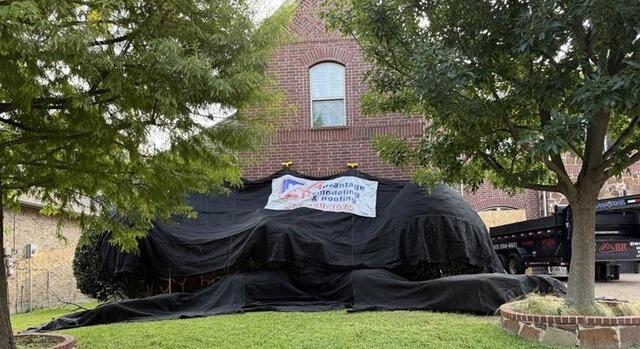
The second image in this McKinney roofing project does not show a finished roof at all. Instead, it captures one of the most important preparation steps before tear-off: black protective covering draped over shrubs and the front work zone. The first photo shows the windows and landscaping open to view. The next condition shows those same areas shielded before roofing debris begins moving from the roof to the ground. That makes this Before and After pair about property preparation rather than the appearance of new shingles.
The covering was installed to help protect windows, bushes, and landscaping while the old roof was removed. It was also intended to help control debris so loose material would be less likely to settle into difficult areas around the property. Those are practical concerns during roof replacement work, because tear-off temporarily turns the space around the house into an active construction zone even when the roofing work itself is taking place overhead.
Looking closely at the two stages, the landscaping provides the clearest point of comparison. Shrubs that are exposed in the first view are covered in the second, and the area below the windows is separated from the work zone by the draped material. The covering changes the appearance of the front of the house only temporarily, but that temporary change is the subject of this project. It shows what preparation can look like immediately before the more visible roofing work begins. For homeowners, this stage can be useful to understand because it happens before the dramatic part of a reroof. Materials may arrive, access routes are established, and parts of the property that sit below roof edges can be shielded. Landscaping cannot simply be moved indoors, and windows remain where they are, so protection has to be arranged around fixed features. The McKinney photos make that planning visible without needing to show the entire roof-removal sequence.
Property protection has to fit the shape of the home and the layout of its yard. A front elevation with shrubs directly below the eaves presents different conditions from an open side yard or a driveway with little planting. The covering in this project follows the actual front work area, including the vegetation and window zones that the crew intended to shield. That is more informative than treating preparation as a single identical setup for every house.
Homeowners reviewing roofing and remodeling work in McKinney can use this project as a reminder to look at what happens around the house as well as what happens on the roof. During tear-off, the ground-level environment matters because removed material has to travel somewhere. A thoughtful setup can create a clearer separation between active roofing work and the parts of the property the homeowner wants protected.
The two photos also clarify why the title focuses on protecting the home before replacement. The After condition here is not the final architectural result; it is the prepared condition that comes after the unprotected yard and before the roofing system is removed. That makes the project unusual among Before and After examples. Its transformation is temporary by design, but the temporary setup supports the larger roof project that follows. By the end of this comparison, the most important visual change is the black covering itself. Windows, shrubs, and landscaping that began fully exposed are now screened from the immediate work zone, while the shape of the home remains unchanged behind them. For a homeowner preparing for roof tear-off, that simple contrast answers a practical question: what can the property look like when the crew has taken time to shield vulnerable areas before removal work starts?