The Main Parts of a Roof Explained for Collin County Homeowners: Your Complete Guide (2026)
ARTICLES/BLOG
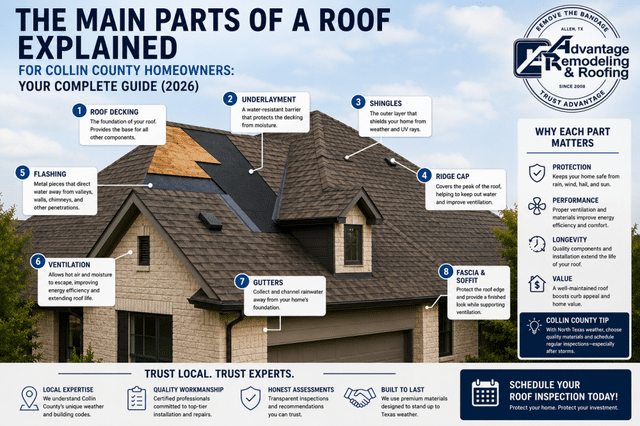
Introduction: Why Knowing Your Roof Matters in North Texas
When you live in North Texas, your roof does more than just keep the rain out—it stands guard against hailstorms, high winds, blistering summer heat, and the occasional winter freeze. Still, for most homeowners, what actually makes up a roof can feel like a mystery. Maybe you’ve just moved into a new house in Collin County, or perhaps you’re considering a roof repair in Frisco after a recent storm. Wherever you are in the DFW Metroplex, understanding the main parts of your roof helps you make smarter decisions about maintenance, repairs, and upgrades. As local roofing professionals at Advantage Remodeling & Roofing, we’re here to break down the basics in plain English—so you can feel confident protecting your biggest investment.
Why Roof Anatomy Is Important for North Texas Homes
North Texas weather is famously unpredictable. In one year, you might experience hail, heavy spring rains, scorching sun, and even a freeze event or two. Every one of those weather extremes puts stress on your roof—but not all parts of the roof are impacted equally. Knowing the different components of your roof helps you spot issues early, ask informed questions during inspections, and make cost-effective choices when it comes time for repairs or replacements. Plus, when you understand what’s overhead, you’ll be less likely to fall for roofing myths or unnecessary upsells. In this guide, we’ll walk through the essential parts of a residential roof, explain what each one does, and highlight what North Texas homeowners need to know.
Breaking Down the Main Parts of a Roof (Plain English Explanations)
1. Roof Deck (Sheathing)
The roof deck is the base layer—usually made from plywood or oriented strand board (OSB)—that’s attached directly to your home’s framing. Think of it as the foundation for all other roof components. The deck provides structural support for the roofing material above and makes sure your roof’s load is spread evenly. In North Texas, a solid, well-maintained deck is crucial for withstanding high winds and supporting heavy shingles, especially after hail or storms. If the deck is damaged by moisture or rot, the entire roof system can be compromised, so regular inspections are important.
2. Underlayment
Between your shingles and the roof deck sits the underlayment—a water-resistant or waterproof barrier that acts as the last line of defense against leaks. Most homes in DFW use synthetic underlayment or felt paper. It’s especially important after storms or during heavy rain, as any damage to the shingles above could let water seep in. In our experience, modern synthetic underlayments offer improved durability and better protection from North Texas’ humidity and summer downpours compared to old-fashioned felt.
3. Drip Edge
The drip edge is a strip of metal installed along the edges of your roof, right where the shingles meet the gutters or eaves. Its main job is to direct water away from your fascia and into the gutters, protecting your home from wood rot and water damage. Many older homes in Collin and Denton County were built without proper drip edge, which can lead to costly repairs down the road. If you’re having your roof replaced—or even just repaired after hail or wind damage—make sure your contractor includes a high-quality drip edge.
4. Ice & Water Shield
Ice and water shield is a self-adhesive membrane that provides extra protection in leak-prone areas, such as roof valleys, around chimneys, and at eaves. While North Texas doesn’t get much snow or ice, freeze events do happen. When they do, ice dams can form and cause water to back up under the shingles. Using ice and water shield in vulnerable spots can make the difference between a quick repair and major interior water damage.
5. Roofing Material (Shingles, Metal, Tile, Etc.)
The roofing material—the part you see from the curb—can be asphalt shingles, metal panels, clay or concrete tile, or even slate. In North Texas, asphalt shingles are by far the most common, favored for their affordability and resilience against hail and wind. Some homeowners are upgrading to metal roofing for its extreme durability and heat reflection, which can help with those triple-digit summer days. No matter the material, regular maintenance is key to longevity, especially with our region’s weather swings.
6. Ridge
The ridge is the highest horizontal line on your roof—where two roof planes meet at the peak. This is where ridge cap shingles (or a metal ridge cap, on metal roofs) are installed to seal the top seam and help shed water. The ridge is also a common place for ridge vents, which allow hot, moist air to escape from your attic and prevent mold and heat buildup. Proper ridge installation is especially important in North Texas homes, where attic ventilation directly affects indoor comfort and energy bills.
7. Hip
Not all roofs have hips, but if yours does, they’re the outward-facing angles where two roof planes meet (think of the corners on a pyramid-shaped roof). Hips help direct water off your roof and down to the gutters. They’re covered with special hip cap shingles or metal trim, which need to be installed correctly to prevent leaks—especially during our area’s frequent wind-driven rain.
8. Valley
A valley is the internal angle where two roof slopes meet. Roof valleys see a lot of water flow during storms and are among the most leak-prone areas. In North Texas, we often see valleys damaged by hail or clogged with debris, which can trap water and accelerate deterioration. Proper installation, flashing, and routine cleaning are essential to keep valleys watertight and trouble-free.
9. Flashing
Flashing consists of thin metal strips installed wherever the roof meets a wall, chimney, vent, or other protrusion. Its purpose is to seal gaps and direct water away from vulnerable joints. Without proper flashing, water can seep into your attic or walls, leading to mold, rot, and expensive repairs. After every major storm, check your flashing for damage or displacement, as even a small gap can become a big problem fast.
10. Ventilation (Ridge Vents, Soffit Vents, Box Vents)
Ventilation is a critical but often overlooked part of North Texas roofing. Proper ventilation—using ridge vents, soffit vents, or box vents—helps regulate attic temperature and humidity. With our hot summers, this can make a big difference in reducing cooling costs and preventing heat-related shingle damage. Poor ventilation leads to higher energy bills and can shorten your roof’s lifespan. During a roof replacement, always discuss ventilation options with your contractor.
11. Gutters & Downspouts
Gutters and downspouts work together to channel water away from your home’s foundation. In North Texas, where heavy rainstorms can dump inches of water in an hour, a clogged or poorly installed gutter system can lead to serious foundation and landscaping issues. Regular cleaning and maintenance of your gutters—especially after storms or when the leaves fall—will protect your home and prevent expensive drainage problems.
12. Fascia & Soffit
The fascia is the horizontal board running along the edge of your roof, while the soffit is the underside that connects the roof to your home’s exterior walls. Both play an important role in supporting your gutters, sealing your attic, and keeping out pests. North Texas humidity and storms can cause wood fascia and soffit to rot or warp over time, so regular inspection is key. Modern homes often use aluminum or vinyl for longer-lasting protection.
13. Chimney & Skylight Flashing
If your home has a chimney or skylight, special flashing is required to seal these features and prevent leaks. Because these areas penetrate the roof, they’re especially vulnerable to water intrusion—more so during North Texas hailstorms or freeze events. Skilled installation and routine inspection of chimney and skylight flashing are crucial for a watertight roof.
Real Homeowner Scenarios: North Texas in Action
Imagine a late spring hailstorm in Allen. You notice a few shingles in your yard the next day. On inspection, you see granule loss on the shingles, dented gutters, and exposed underlayment in one roof corner. Because you know the parts of your roof, you’re able to call a local roofer and explain exactly where the problem is—saving time and helping your contractor focus the repair effectively.
Or picture a summer heatwave in Plano. Your energy bills are climbing, and your attic feels like an oven. Knowing the importance of roof ventilation, you ask for an attic inspection. The contractor discovers your soffit vents are blocked, and your ridge vent isn’t functioning properly. With that simple fix, your cooling costs drop, and your shingles last longer in the Texas sun.
Common Mistakes Homeowners Make About Roof Parts
Many North Texas homeowners assume all roofing materials and parts are the same. In reality, using the wrong type of underlayment or skipping proper flashing can lead to problems later on. Some try to repair storm damage themselves, not realizing the risk of voiding insurance coverage or missing deeper structural issues. Others ignore gutter maintenance, leading to foundation damage. The biggest mistake is waiting for a visible leak instead of scheduling regular roof inspections—especially after hail, wind, or heavy rain.
Weather Relevance: Roofing Parts and DFW Storms
From hail to heatwaves, North Texas weather is tough on roofs. Hail can bruise shingles and dent flashing, while high winds rip off ridge caps and dislodge gutters. UV rays dry out sealants, and sudden freezes can crack tiles or shingles. That’s why every roof part—deck, underlayment, flashing, ventilation, gutters—plays a critical role in defending your home. After every major weather event, a professional inspection can catch damage early, before minor problems grow into major repairs.
Contractor Insights: What Local Pros Want Homeowners to Know
As a trusted North Texas roofing contractor, we’ve seen it all—from DIY patch jobs that failed during the next storm to new homes with improperly installed drip edge. The best investment you can make is in quality materials and experienced installation. Ask your roofer to explain what products they use, and why. Always confirm that proper ventilation, flashing, and gutter protection are part of the job. And remember: just because a roof “looks OK” from the ground doesn’t mean every part is functioning properly.
If you’re considering a roof replacement or repair, check out our Roof Repair and Roof Replacement pages for more details on our process and what to expect.
Insurance & Cost Considerations for Roof Parts
Understanding your roof’s anatomy can also help when dealing with insurance claims after storm damage. Insurance adjusters look for damage to specific parts—shingles, underlayment, flashing, gutters—and knowing the terminology helps you communicate more effectively. Repairs are often less expensive when caught early, so don’t delay inspections after storms. For major repairs or replacements, ask your contractor about financing options to spread out costs.
FAQ: Homeowner Questions About Roof Parts in North Texas
Q: What’s the most important part of my roof?
A: All parts work together, but in North Texas, underlayment and flashing are especially critical for preventing leaks during storms.
Q: How often should I inspect my roof?
A: Schedule a professional inspection at least once a year, and always after hail, wind, or severe storms.
Q: Do I need roof ventilation if my attic feels fine?
A: Yes. Proper ventilation extends shingle life, lowers energy bills, and prevents moisture damage—even if your attic doesn’t “feel hot.”
Q: Can I replace missing shingles myself?
A: It’s best to call a pro. DIY repairs can miss deeper issues or void your roof warranty.
Q: How do I know if my flashing is damaged?
A: Look for rust, gaps, or loose sections—especially after storms. If in doubt, schedule an inspection.
Conclusion: Protect Your Home by Knowing Your Roof
Understanding the main parts of your roof isn’t just “nice to know”—it’s essential for every North Texas homeowner. From the deck up to the ridge, every component faces unique challenges from our weather. When you know the basics, you’re empowered to work with your contractor, make informed decisions, and keep your home safe for years to come. For trusted, local expertise, Advantage Remodeling & Roofing is always here to answer questions, provide thorough inspections, and make sure every part of your roof is ready for whatever North Texas throws your way.