How a Roof Works Step By Step For Homeowners
 Your Roof: North Texas’s Unsung Hero
When you think about what really keeps your home safe in North Texas, your roof should be at the top of the list. With our blazing summers, wild hailstorms, heavy downpours, and gusty winds, your roof works overtime to protect everything (and everyone) underneath it. Whether you live in Plano, Allen, McKinney, or Frisco, the right roofing system is the difference between peace of mind and expensive repairs you never saw coming.
The Local Roofing Challenges You Face
- Hailstorms: North Texas is smack in the middle of “Hail Alley.” Hail isn’t just noisy—it can actually crack, dent, or weaken your shingles and roof structure.
- Extreme Heat: Our Texas sun is no joke. Roof temps can soar over 150°F, which can really speed up the aging process—especially if your materials aren’t up to par.
- Heavy Rain & High Winds: Our spring and summer storms will push any roof to its limits, testing how well it sheds water and handles those strong gusts.
- Humidity & UV Exposure: Long stretches of sun and moisture can leave you dealing with mold, algae, or shingles that just don’t last.
That’s why it really pays to know how your roof works—and what makes for a truly durable roofing system in our unique climate.
Anatomy of a Residential Roof: Layer by Layer
A roof isn’t just one thing—it’s a carefully built system, with each layer playing a special role in protecting your home from North Texas weather. Here’s how it all comes together:
-
Roof Deck (Sheathing)
- Think of this as the foundation for your roof. Usually made from OSB or plywood, the deck is attached directly to your home’s frame. It has to be solid, dry, and free of any rot before anything else goes on top. A strong deck keeps your whole system sturdy and prevents sagging.
-
Underlayment
- This is your roof’s first real line of defense after the deck. In Texas, we mostly use synthetic underlayment because it stands up to our heat and resists tearing. Old-school felt is still around, but it just doesn’t hold up as well in our climate. The underlayment helps keep moisture out and catches any leaks that might sneak past your shingles.
-
Ice & Water Shield
- This self-stick, waterproof membrane is a lifesaver in all the places water likes to cause trouble—like valleys, around chimneys, skylights, and plumbing vents. In Texas, it’s especially important in roof valleys and anywhere storms might cause water to pool.
-
Drip Edge
- Picture a thin metal strip running along the edges of your roof. That’s the drip edge, and it’s there to guide water safely into the gutters and away from your home’s woodwork. It’s simple but so important for preventing rot and leaks.
-
Starter Strip Shingles
- These go on before your main shingles and create a tight seal at the roof edges. They line up your first row and help stop wind and water from sneaking under the rest of your shingles.
-
Field Shingles (Main Roofing Material)
- This is what you see from the curb—your main shingles.
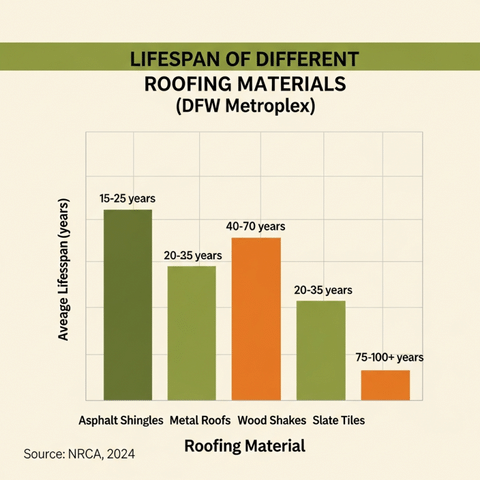
- Asphalt shingles: Most common and last about 15–25 years in North Texas.
- Metal roofs: Long-lasting and durable, with an average lifespan of 20–35 years.
- Wood shakes: Offer a classic look and can last 40–70 years with proper care.
- Slate tiles: Extremely durable, with a lifespan of 75–100+ years.
- This is what you see from the curb—your main shingles.
-
Flashing
- Thin metal sheets that seal up all the tricky spots—like where your roof meets a wall, or around chimneys, vents, and valleys. Good flashing is what keeps leaks out of the places where water loves to find its way in.
-
Roofing Vents and Attic Ventilation
- Hot Texas attics can cook your shingles from underneath. That’s why you need proper ventilation:
- Ridge vents at the top let heat escape.
- Soffit vents under the eaves pull cooler air in.
- Box vents or turbines can help boost airflow. Good ventilation means your shingles last longer, your home stays cooler, and you avoid mold or wood rot.
- Hot Texas attics can cook your shingles from underneath. That’s why you need proper ventilation:
-
Hip & Ridge Cap Shingles
- Special shingles made just for the roof’s highest points. They seal out water at the hips and ridges and help your roof look finished and professional.
When each layer is installed right, your roof works as a team—keeping your home safe, your energy bills lower, and your curb appeal high.
How Texas Weather Impacts Your Roof
Let’s be honest, our North Texas weather is rough on roofs. Hail can bust up shingles, the sun can crack and dry them out, and sudden storms will find any weak point. Even just regular humidity can cause hidden problems over time. That’s why having a roof built specifically for Texas weather is a smart investment.
What Makes a High-Quality Roofing System?
A great roof isn’t just about slapping on the best shingles. You want a whole system—impact-resistant shingles, strong decking, quality underlayment, and, most importantly, a team that knows how to put it all together. When all those pieces work as one, you get a roof that stands up to Texas and lasts for years.
Meet Klaus Roofing Systems
We’re proud to bring Klaus Roofing Systems to North Texas. It’s not just another roofing brand—it’s a whole way of doing things better. Klaus-trained crews focus on every detail, use top-tier materials, and back their work with lifetime warranties. We’re all about clear communication, respect for your property, and making sure your roof is built to last.
IKO Roofing Materials: Built for Texas
When it comes to shingles, we trust IKO because they’re made for tough North American climates just like ours.
- Class 4 impact resistance means better protection against hail and wind.
- Cool roofing options can help your attic (and your whole house) stay cooler in those brutal summers.
- Algae resistance means your roof stays looking good, even in our humidity.
- Plus, you get a huge range of colors to match your personal style.
Pro Tips for Texas Homeowners
- Get your roof checked at least once a year—and always after a big storm.
- Look for missing or damaged shingles and check for granules in your gutters.
- Keep gutters clear to avoid water damage.
- Upgrade to impact-resistant shingles when you can—they might even save you money on your insurance.
- Don’t ignore small leaks—they get big (and expensive) fast in Texas.
Frequently Asked Questions
How long should a roof last here?
Depending on materials, typical lifespans in North Texas are:
- Asphalt shingles: 15–25 years
- Metal roofs: 20–35 years
- Wood shakes: 40–70 years
- Slate tiles: 75–100+ years
What’s the best shingle for hail?
Class 4 impact-rated asphalt shingles, like IKO Dynasty, are built to take a beating.
Will a new roof lower my energy bills?
Yes! Reflective shingles and good ventilation can make a big difference, especially in the summer.
Is attic ventilation really so important?
Absolutely—proper airflow keeps your attic dry and your shingles from baking in the Texas heat.
Why choose Advantage Remodeling and Roofing?
We’re local, we care, and we combine the best in materials and training with honest, straightforward service.
Ready for Peace of Mind? Get Your Free North Texas Roof Inspection
Whether you’re in Plano, Frisco, Allen, or McKinney, we’re here to help you make the best decisions for your home. Call us for a free, no-pressure inspection and a clear, honest estimate. We’ll explain everything in plain English—no jargon, no surprises.
Contact Advantage Remodeling and Roofing today and see the difference a true Texas roofing expert can make!